What Is “Math Anxiety” — And How Can You Help Your Child Overcome It?

What Is “Math Anxiety” — And How Can You Help Your Child Overcome It?

If your child melts down at the sight of a math worksheet…

If they freeze when you ask them a basic fact…

If they suddenly “forget everything” during a quiz…

You might be looking at math anxiety.

And no — it’s not the same thing as “being bad at math.”


What Math Anxiety Actually Is

Math anxiety is a stress response.

Not a knowledge gap.

Not laziness.

Not a lack of intelligence.

It’s what happens when your child’s nervous system associates math with pressure, shame, embarrassment, or repeated failure.

When the brain senses threat, it shifts into survival mode.

And here’s the tricky part:

The same part of the brain used for problem-solving (working memory) is the part that shuts down under stress.

So when a child says,

“I don’t know how to do this!”

Sometimes what they really mean is,

“My brain is offline right now.”

The anxiety blocks access to the skills they may actually have.


Where It Comes From

Math anxiety can develop from:

  • Timed tests

• Public correction in class

• Repeated low scores

• Moving too quickly through concepts

• Comparing themselves to peers

• Being told they’re “not a math person”

For neurodivergent kids — especially those with dyscalculia, ADHD, processing delays, or perfectionism — math anxiety is even more common.

If numbers are already harder to process, and then you layer time pressure or shame on top?

The brain starts to brace for math like it’s a threat.

And once that association forms, even opening the book can trigger it.


Signs You Might Be Seeing Math Anxiety

It doesn’t always look dramatic.

Sometimes it looks like:

  • Avoidance

• “Bathroom breaks” during math

• Complaints of headaches or stomach aches

• Tears over “easy” problems

• Perfectionism and erasing constantly

• Rushing to get it over with

• Refusing to try at all

The child isn’t being dramatic.

Their nervous system is trying to protect them.


How to Help

The goal isn’t to make math wildly entertaining.

The goal is to make it feel safe.

1. Slow It Down

If a concept is supposed to take one day, let it take a week.

Mastery builds confidence.

Speed builds stress.

You are not on a clock.


2. Remove the Time Pressure

Timed drills are a huge trigger for many kids.

Accuracy matters more than speed.

You can build fluency gradually — without a stopwatch.


3. Make It Concrete

Abstract numbers on paper can feel overwhelming.

Use:

  • Lego

• Baking

• Measuring cups

• Money

• Cutting food into fractions

• Building arrays with blocks

Touching math reduces fear.


4. Normalize Struggle

Be careful with language like:

“You’re so smart!”

Because when they struggle, they’ll think,

“Then why can’t I do this?”

Instead try:

“This is hard — and you’re working through it.”

“Struggling means your brain is growing.”

“We can take this one step at a time.”

Effort over identity.


5. Separate Their Worth from the Score

A low score is information.

Not a verdict.

If your child works for 60 hard minutes and gets 50%, that effort matters — even if the system doesn’t reward it.

Math is a skill.

Not a measure of intelligence.


The Long Game

Most adults use calculators.

Most adults look things up.

Most adults don’t solve equations under time pressure.

What they do need is perseverance.

Confidence.

The belief that they can face something hard and figure it out.

That’s what you’re building.

And that doesn’t come from pushing harder.

It comes from lowering fear.

Math anxiety can absolutely improve.

But it improves when the nervous system feels safe enough to try.

And if you’re reading this because you’re worried?

That tells me something important.

You care.

And caring is the foundation of everything that works.

? Lindsey

certified special-ed educator & co-founder, Schoolio

You’re Not Doing It Wrong. You’re Parenting a Neurodivergent Child.

You’re Not Doing It Wrong. You’re Parenting a Neurodivergent Child.


If you’re homeschooling a neurodivergent child, there’s a moment most of us hit where the doubt gets loud.

Your child is bright. Creative. Curious. And yet… school didn’t work. Public school didn’t work. Private school didn’t work. And now, even homeschooling can feel heavy some days.

You start wondering if you’re missing something. If you picked the wrong program. If you should be doing more. If the anxiety around math or reading means you’ve somehow failed them.

I want to say this clearly, because so many parents need to hear it:

You’re not doing it wrong. You’re parenting a neurodivergent child in a world that wasn’t built for them.

So many of the families I talk to are raising kids who are Autistic, ADHD, PDA, dyslexic, anxious or combinations. These are kids with incredible strengths — but they don’t respond well to rigid systems, constant demands, or learning environments that prioritize compliance over safety.

When learning comes with pressure, their nervous systems go into protection mode. Anxiety rises. Resistance shows up. And suddenly the focus isn’t learning anymore — it’s survival.

That doesn’t mean your child is “behind.”

It means the environment hasn’t fit them yet.

One of the hardest parts of homeschooling neurodivergent kids is letting go of the idea that learning should look linear. Or quiet. Or efficient. These kids often learn in bursts. In spirals. In intense interest-driven deep dives, followed by periods where they need rest and regulation more than content.

And that’s not a flaw — it’s information.

A child who struggles with math anxiety isn’t refusing because they’re lazy. A child who avoids reading isn’t failing because they don’t care. A child with PDA isn’t being oppositional — they’re protecting their autonomy because demands feel unsafe in their body.

When we understand that, everything shifts.

Homeschooling stops being about “fixing” them or catching them up, and starts becoming about building a learning environment that works with their brain instead of against it.

That might mean slowing down.

It might mean breaking lessons into smaller pieces.

It might mean offering more choice.

It might mean focusing on engagement and confidence before academics.

And yes — it might look very different from what school told you education is supposed to be.

But different doesn’t mean wrong.

If you’re showing up, adjusting, listening, and trying to understand your child — you’re already doing the most important part of this work. Neurodivergent kids don’t need perfect plans. They need adults who see them, trust them, and are willing to learn alongside them.

You’re not failing.

You’re learning.

And that’s exactly what your child needs from you.


? Lindsey

certified special-ed educator & co-founder, Schoolio

Why More Parents Are Choosing Homeschooling Even When It Was Never the Plan

Why More Parents Are Choosing Homeschooling Even When It Was Never the Plan


This has been on my mind today…

I read a story recently about a parent who never planned to homeschool. It was not ideological. It was not a protest. It was not about rejecting school. It was simply about responding to a child who was struggling in ways that could no longer be ignored.

That story keeps echoing because it sounds like so many families I speak to.

The decision to homeschool is often framed as a bold choice or a radical one. In reality, for many parents, it is a quiet pivot. A moment where they realize that what is supposed to be working simply is not. Their child is anxious. Or exhausted. Or shutting down. Or falling behind while being told they are doing fine.

What struck me most was how ordinary the story was. No dramatic failure. No single breaking point. Just a slow accumulation of signs that school was costing more than it was giving.

This is something we do not talk about enough.

We talk about grades. We talk about outcomes. We talk about standards. But we rarely talk about the emotional tax school can take on a child who learns differently or feels out of place. We rarely talk about how long parents sit with doubt before making a change. Or how much guilt comes with admitting that the default path might not be the right one for your child.

Homeschooling, in these stories, is not about pulling kids away from the world. It is about bringing learning closer to who they are. It is about restoring confidence. It is about slowing things down long enough for curiosity to return.

Many of these parents still value structure. They still value rigor. They still care deeply about education. They are not opting out. They are opting in differently.

What keeps coming up is this idea of safety. Not physical safety, but emotional safety. The freedom to ask questions without fear. The space to make mistakes without labels. The ability to learn at a pace that does not constantly signal failure.

This is where homeschooling becomes less about location and more about intention.

At schoolio, we see this pattern over and over. Families who did not start out wanting to homeschool. Families who simply wanted their child to feel capable again. Families who wanted learning to stop being a daily battle.

Homeschooling is not a punishment. It is not giving up. It is not settling for less. For many families, it is a way to rebuild trust in learning itself.

Every child has a relationship with education. When that relationship is damaged, it needs care. Sometimes that care looks like staying and advocating. Sometimes it looks like stepping back and rebuilding at home.

What matters most is that we stop pretending there is only one right way.

Homeschooling is not for everyone. But for the families who choose it, often unexpectedly, it is not about escaping school. It is about choosing their child.


Sathish

still learning, still unlearning

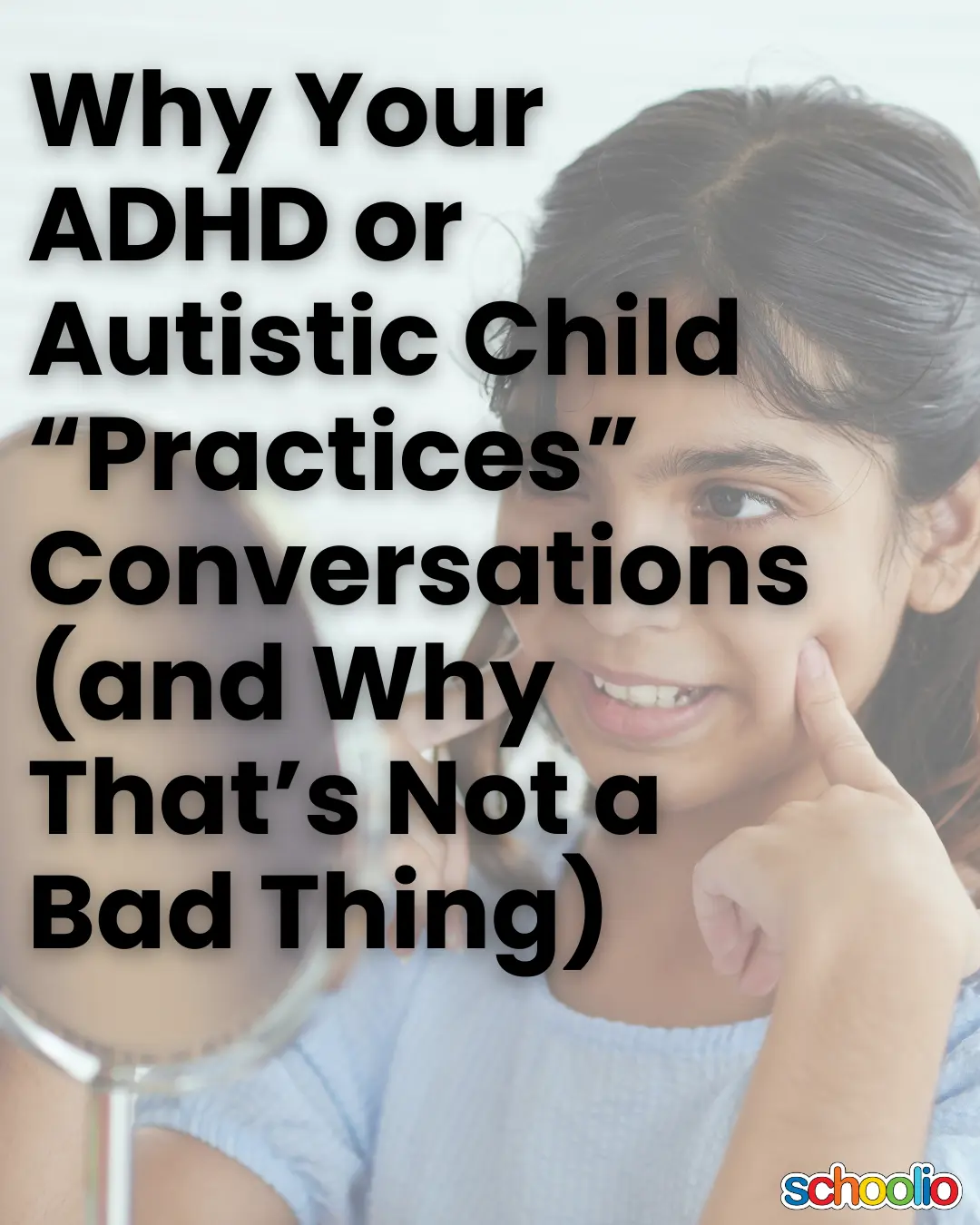
Why Your ADHD or Autistic Child “Practices” Conversations (and Why That’s Not a Bad Thing)

Why Your ADHD or Autistic Child “Practices” Conversations (and Why That’s Not a Bad Thing)


Have you ever noticed your child repeating the same sentence over and over before a phone call?

Or whispering what they’re going to say before walking into a room?

Or replaying conversations long after they’re over, worrying they said the “wrong” thing?

If so, you’re likely seeing scripting — a very common and very human coping strategy for autistic and ADHD kids.

And no, it’s not something you need to stop or “fix.”


What Is Scripting, Really?

Scripting is when someone mentally rehearses words, phrases, or entire conversations ahead of time. For neurodivergent kids, especially autistic and ADHD kids, it’s a way to prepare for social situations that feel unpredictable, overwhelming, or high-stakes.

Think of it like this:

Most people can improvise socially without much effort. For neurodivergent kids, social interactions often require conscious processing. Tone, timing, facial expressions, word choice — it’s a lot to manage all at once.

Scripting helps reduce that load.


Why Neurodivergent Kids Script

Scripting isn’t about being robotic or inauthentic. It’s about safety.

Many ADHD and autistic kids have experienced:

  • Being misunderstood
  • Saying the “wrong” thing and being corrected or teased
  • Feeling embarrassed or rejected after social interactions

Over time, their brains learn: Preparation feels safer than guessing.

Scripting gives them:

  • A sense of control
  • Predictability in an unpredictable world
  • Time to organize thoughts before speaking
  • A way to reduce anxiety before social demands

For some kids, scripting is the difference between engaging socially and avoiding it altogether.


What Scripting Feels Like for Kids

From the inside, scripting often feels like:

  • “If I practice, I won’t mess this up.”
  • “If I know what to say, I won’t get in trouble.”
  • “If I’m prepared, I’ll be less embarrassed.”

It’s not about manipulation or performance — it’s about self-protection.

And for kids who already struggle with emotional regulation, rejection sensitivity, or social anxiety, that protection matters.


When Scripting Is Helpful

Scripting can be incredibly supportive when it:

  • Reduces anxiety before social interactions
  • Helps kids advocate for themselves
  • Allows them to participate when they otherwise might shut down
  • Builds confidence through successful interactions

Many kids use scripting to:

  • Practice greetings
  • Prepare for phone calls
  • Navigate classroom discussions
  • Rehearse how to ask for help

In these cases, scripting is a tool, not a problem.


When Scripting Can Become Stressful

Like any coping strategy, scripting can become overwhelming if it turns rigid.

Some kids may struggle when:

  • Conversations don’t follow the “planned” path
  • Someone responds unexpectedly
  • They feel pressure to say things exactly right

When that happens, you might see:

  • Increased anxiety or shutdowns
  • Frustration when plans change
  • Avoidance of social situations altogether

This doesn’t mean scripting caused the problem — it means the need for safety is still very high.


How Parents Can Support Scripting (Without Making It Worse)

The goal isn’t to eliminate scripting — it’s to support it gently while building flexibility over time.

1. Normalize It

Let your child know scripting is okay.

“You’re practicing because you want it to go well. That makes sense.”

Shame increases anxiety. Normalization reduces it.


2. Practice Together

Role-play conversations in a low-pressure way.

  • Practice asking questions
  • Practice different responses someone might give
  • Practice what to do if things don’t go as planned

This builds flexibility without removing safety.


3. Teach “Backup Plans,” Not Perfection

Instead of perfect scripts, help your child develop:

  • A few flexible phrases
  • Exit strategies (“I need a minute”)
  • Repair phrases (“Can I try saying that again?”)

These tools reduce panic when conversations shift.


4. Don’t Force Spontaneity

Pushing kids to “just go with the flow” often backfires. Spontaneity grows naturally when safety increases — not when pressure does.


5. Celebrate the Effort

Scripting takes mental energy. Acknowledge that.

“I know that took courage.”

“You worked really hard to prepare for that.”

Feeling seen matters.


The Big Picture

Scripting isn’t a sign that your child lacks social skills.

It’s a sign that they’re working very hard to connect.

When supported with empathy, scripting can:

  • Increase confidence
  • Reduce anxiety
  • Serve as a bridge toward more flexible communication

Your child isn’t broken for needing extra preparation. They’re adapting — and that’s something worth honoring.

The Magic in the Daily

The Magic in the Daily


This has been on my mind today…

“Why?” he would ask.

And I’d answer.

“Why?” he’d ask again.

And I’d stop whatever I was doing to explain another thing that caught his attention. He was five. Curious about everything. I loved answering his million questions a day.

As we get older, we forget that feeling. We take the everyday things for granted. But through the eyes of a five-year-old, everything is magical. The TV remote is magical. The spoon is magical. The window light feels magical.

I miss that. The magic in the daily.

There’s so much noise now. So much to focus on, worry about, manage. And for parents who have taken on the incredible task of homeschooling, I see you. You are some of the most courageous people I’ve met through Schoolio. You are re-learning curiosity alongside your kids, rebuilding connection in the middle of chaos.

At Schoolio, that’s what we try to bring back — the why. The spark that makes learning feel alive again. Not because it’s perfect, but because it’s personal. Because when learning feels magical, kids don’t just remember the lesson. They remember how it made them feel.

That’s what matters. That’s what we’re building.


Sathish
still learning, still unlearning

Worried Homeschooling Is Too Expensive? Here’s Your Defense Over the Costs

Worried Homeschooling Is Too Expensive? Here’s Your Defense Over the Costs


Yes, homeschooling has costs — but so does public school. The difference? You control what you spend and why.

I hear from parents considering homeschooling all the time…

“I want to start homeschooling… but what if I just can’t afford it?”

It’s a fair question. And while homeschooling does cost money — for curriculum, field trips, and supplies — I think it’s time we talk honestly about something people don’t always mention:

? Public school isn’t free.

The truth is, both paths have costs. But with homeschooling, you get to decide what you buy and how much you spend, based on your values and your child’s needs — not what’s written on a school form or fundraiser sheet.

Let’s break it down.


? How Much We Spend on Homeschooling

If you’ve met me, and a lot of you have, you probably know I’m an incurable Type-A planner. We also homeschooled our two kids on one income, as I know many of you are as well. For several years I tracked everything that was homeschool related, so I knew exactly how much we were spending on:

  • Curriculum
  • Field trips
  • Supplies
  • Anything we wouldn’t have spent otherwise if they were in school

But here’s the kicker…


vs. What We Spent in Public School (Hint: It Was More)

This spending tracking didn’t begin with homeschooling though- back when my kids were in public school, I also tracked our spending. Those years?

We spent almost $100 more per childfor free public school.

Here’s where that money went:

  • Back-to-school supplies (the specific ones required)
  • Indoor shoes, gym clothes, weather gear – and clothing replacements when they are lost and stolen
  • School events: BBQs, fairs, pizza day, candy cane day, milkshake day…
  • Valentines, classroom parties, book fairs, teacher gifts
  • Hot lunches and fundraiser purchases
  • Fad items and brand names your kids have to have in order to not be bullied

We weren’t even high-participation parents! We did just enough that our kids didn’t feel left out, but not every event or lunch or fundraiser.

And still? It added up.


? The Big Difference with Homeschooling: You’re in Control Now

Homeschooling gives you something public school doesn’t:

Control over what you spend — and what you get for it.

You decide:

  • Which curriculum to invest in (or whether to build your own)
  • How often you take field trips
  • Whether you spend more time or more money — whichever fits your family
  • What supplies, tools, or extras actually matter in your homeschool

You’re not just handing money over for a pizza party you didn’t ask for.

You’re choosing what best supports your child’s growth — and your family’s goals.


? Homeschooling Can Work on a Budget

You’ll spend either money or time — or some combination of both.

The beauty is: you get to choose what’s worth it.

Whether you’re middle-of-the-road spenders, doing things ultra-minimally with free resources and DIY everything, or have some room to buy back more time — there’s no one “right” budget for homeschooling.

But don’t let the myth of free public school fool you. The costs are real.

The difference is, with homeschooling, you’re investing with intention.

Lindsey

Certified Special Ed Educator & Co-Founder, Schoolio

Homeschooling Isn’t a Competition — It’s an Alignment

Homeschooling Isn’t a Competition — It’s an Alignment


I saw this passage today and it hit me hard.


Your life will change when you understand this


“You are only ever competing against one thing — your own self-doubt.”

When I think about homeschooling families, this couldn’t be more true.

So many parents start this journey filled with doubt. Am I enough? Am I doing it right? What if my child falls behind?
But the families who thrive — the ones I see at Schoolio every day — aren’t necessarily the most organized, experienced, or well-resourced.

They’re simply the ones who believe they can do this.

Who trust that learning at home, in their own rhythm, is enough.
They drop the competition mindset. They stop comparing their kids to traditional classrooms. They stop chasing grades and start building connection.

Homeschooling isn’t about outperforming anyone. It’s about aligning — with your child, your values, and the kind of life you want to build together.

When families stop trying to “fit in” and start trusting themselves, everything changes.
What you seek — confidence, peace, connection — is already seeking you.

Sathish
Still learning, still unlearning

When Your Homeschool Program Stops Working

When Your Homeschool Program Stops Working


Lately, I’ve been hearing the same story from homeschool parents:

“We’ve used this program for years, but after the latest update it just isn’t working for us anymore. The kids hate it. I feel stuck. What else is out there?”

If that’s you, you’re not alone.

Sometimes a program that served you well in one season stops fitting in the next. Maybe your kids have grown and their needs have changed. Maybe what felt simple and reliable at first now feels limiting. Maybe the content just doesn’t line up with the kind of education you want your child to have.

That doesn’t mean you’ve failed. It just means your homeschool is evolving — and your tools need to evolve with it.

That’s why more and more families are switching to Schoolio.

Not because we’re “perfect” (no program is), but because Schoolio was designed to support the things that matter most in a modern homeschool:

Flexibility: Mix and match grade levels across subjects, skip ahead in one area and slow down in another, and create a program that fits your child instead of forcing your child to fit the program.

Future-Readiness: We go beyond the basics of math, science, and reading. Schoolio includes courses like Financial Literacy, Emotional Intelligence, and Emerging Technology — so kids don’t just learn to pass tests, they learn to thrive in the real world.

Neurodivergent-Friendly Design: Short, bite-sized lessons. Minimized distractions. Hands-on and interest-based options. Schoolio was created by homeschooling parents who know what it’s like to teach ADHD, autistic, and otherwise unique learners — because we’ve lived it.

At the end of the day, switching programs can feel like a big leap. But sometimes, it’s exactly the reset your homeschool needs.

If your current program no longer feels like a fit, that’s not the end of the story — it’s the start of building a homeschool that works better for you today.


? Lindsey

There Are No Bad Kids.

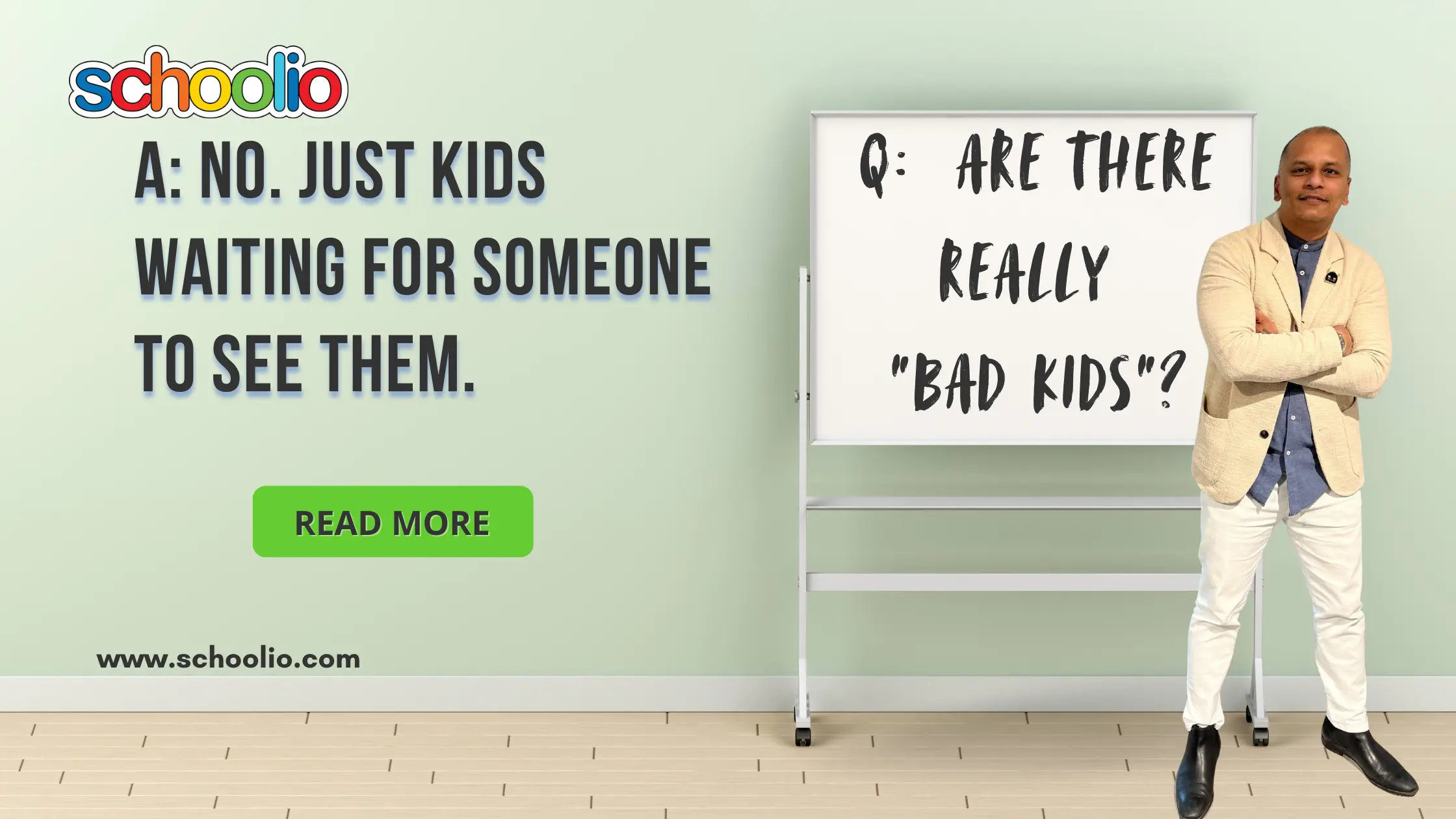
There are no bad kids.

This has been on my mind today…

“Is that your firstborn?” someone would ask. And reluctantly, I would be acknowledged. I was 12 years old. A little boy whose greatest crime was a set of grades that didn’t meet someone else’s expectations.

In school, I wasn’t a troublemaker. But I was already being written off. I didn’t measure up. I didn’t fit in. And no one was coming to help.

What many adults forget is this: There are no bad kids.

there are no bad kids

Some kids feel confused. Others believe they are dumb before they even get a chance to feel capable. A system labels these kids with scores that start their story and end it before they can begin.

For so many children, the moment a poor grade lands in front of them, everything shifts. The label sticks. The expectations drop. The pressure increases. And the love? That part often fades into the background.

From that point forward, learning is no longer something you do to grow. It becomes something you have to prove.

I think back to my own childhood and wonder what would’ve been different if someone — anyone — had paused and asked not, “What’s wrong with you?” but instead, “What makes you come alive?”

That’s why this company, Schoolio, isn’t just a platform for me — it’s personal. I’m not building a business. I’m trying to build what I needed at 12. A place where kids don’t feel invisible. Where parents and students light up together. Where learning — or the lack of it — isn’t used as a weapon or a judgment, but seen as what it truly is: a work in progress. A human journey. A shared path.

That’s what homeschooling offers so many families — not just a curriculum, but a chance to reset the story. To raise children who know their worth, not by test scores, but by the fire in their eyes when something finally clicks. Or the calm that comes when they feel safe enough to try again.

I didn’t get that growing up.

But I’m doing my part to make sure someone else’s child does.

Making a child invisible is the harshest punishment.

Please — don’t do that to your kids.


Sathish

still learning, still unlearning

Unlearning School: What Homeschooling Helped Me See Differently About Education

Unlearning School: What Homeschooling Helped Me See Differently About Education

By Sathish Bala

This has been on my mind today…

When I look back at my own schooling in Singapore during the 1980s, I realize how much of it was built around conformity. A student’s worth was tied to a test score. Our futures were determined by how well we followed instructions, memorized content, and stayed in our seats. That system didn’t see who we were. It only saw what we could produce.

So much of homeschooling — for me, and for the thousands of families I’ve now spoken with — is really about unlearning that model.

At first, most parents try to recreate school at home. Schedules. Desks. Checklists. But slowly, over time, the shift happens. We stop asking, “Am I doing enough?” and start asking, “Is my child curious? Are they feeling safe enough to learn at their own pace?”

We realize that learning doesn’t have to look like sitting still. It can be messy, playful, deeply personal. Sometimes that realization comes from the chaos — the days when nothing goes according to plan, and you see your child learning anyway. Sometimes it comes from joy.

One mom who just started her free trial with Schoolio shared this incredible moment with us:

“I just signed up for a free trial and had my neurodivergent son test out a lesson in Social Studies, a subject he has not previously enjoyed. Until now! He enjoyed the lesson so much he was asking me to please print the PDFs for him to work on, which he also never does. I think this is a very good sign and look forward to him completing other lessons!”

This is the kind of learning traditional school often misses. For many kids, especially neurodivergent learners, subjects like Social Studies or Language Arts become walls instead of doors. But when the format changes — when they get space to go at their pace, explore topics through different modalities, or simply feel like they’re being listened to — everything opens up.

Homeschooling has helped me see that education isn’t about information delivery. It’s about connection. It’s about nurturing curiosity and self-awareness. It’s about teaching kids how to learn, not just what to memorize.

And that’s what public school often forgets — it’s not just the curriculum that needs change. It’s the entire culture. At Schoolio, we believe deeply in giving families the tools to break that culture, and build something better.

Because when we unlearn school, we begin to see learning everywhere.

Sathish

still learning, still unlearning

What Is “Enough” in Homeschooling?

What Is “Enough” in Homeschooling? 

by Lindsey

When I think back on our homeschool journey, one day in particular still stands out like a smudge on the calendar. One of those days where everything just starts off on the wrong foot. No one slept well. The kids were fighting before breakfast. There wasn’t enough coffee in the world to get me centered. And the second I called them to the table to start school, the whining began.

I could feel it coming—low frustration tolerance all around, myself included. Math was the breaking point. Tears, tantrums, and a very dramatic pencil toss across the room. We all lost it a little that morning. Not our best moment. I threw in the towel. I had to. No one learns when they’re emotionally dysregulated. So instead of pushing through, I called it. We put on jackets, walked outside, and just… let go.

It took a while, but we all started to settle. There’s a kind of reset that happens when you’re outside, when the pressure to perform and achieve and “get it done” lifts off everyone’s shoulders. They started to build an obstacle course in the backyard. At first it was just a way to burn off energy. But then I saw it. They were measuring and planning. They were problem-solving. They were testing different ideas, adjusting materials, explaining their thoughts to each other. Without even realizing it, they were doing geometry, physics, and engineering—all in bare feet with sticks and cones.

If they’d been in school that day, I know exactly how it would have gone. They would’ve been just as frustrated, just as unfocused, and they wouldn’t have had the option to take a break. They would’ve had to sit through the rest of the day, disconnected and overstimulated, trying to mask their feelings. At home, they get space to breathe. To stop. To move. To recover. And in doing that, they often end up learning more deeply and more meaningfully than they ever could with a workbook in front of them.

It reminded me of something I know as a special-ed educator, but sometimes forget as a parent: learning doesn’t have to look a certain way to be valid. Progress doesn’t always come in neat packages. Some days, “enough” isn’t checking off every subject—it’s knowing when to pause. It’s recognizing when your child’s brain and heart need care before content.

That day, we didn’t finish our lessons. But we learned a lot. And that was enough.

Certified Special-Ed Educator & Co-founder, Schoolio

Rise in Number of Home Schooled Children – Council

Rise in Number of Home Schooled Children – Council

Rise of Homeschooling: Empowering Families Amid Changing Educational Needs

In recent years, the homeschooling movement has gained remarkable momentum. Across regions like Rotherham, South Yorkshire, where the number of home-educated children has increased by over 300% since 2015. Families are increasingly choosing home education to address diverse challenges. The shift toward homeschooling is often driven by mental health concerns, exam pressures, or dissatisfaction with traditional schooling. This trend reflects a growing desire for education tailored to each child’s unique needs.

At Schoolio, we see this trend as part of a larger movement. This is to decentralize education, empower families, and offer children personalized learning experiences. With our innovative K-8 digital curriculum, we’re committed to supporting families navigating the rewarding but challenging journey of homeschooling.


Why Families Are Turning to Homeschooling

The reasons for the rise in homeschooling are as varied as the families choosing this path. In Rotherham, council data reveals that mental health struggles and academic pressures are among the key drivers. Traditional school environments often fail to provide the flexibility and emotional support many children need, particularly as they approach critical academic milestones like GCSEs.

Homeschooling offers an alternative—one that prioritizes the well-being and individual pace of the student. By allowing families to tailor education to their children’s needs, home education provides a sense of agency and freedom that’s hard to replicate in conventional systems.

This trend is not unique to the UK. Across North America, parents are also opting for home education as they seek greater control over what and how their children learn. With platforms like Schoolio, families can access resources that make homeschooling accessible, flexible, and aligned with their educational values.


The Role of Support in Effective Homeschooling

Choosing to homeschool is a significant decision that comes with its challenges. In Rotherham, the local council has implemented programs to support families in providing suitable education at home. Early intervention teams and guidance resources have helped hundreds of children remain in traditional schools while also aiding those transitioning to homeschooling.

At Schoolio, we believe that support is the cornerstone of successful homeschooling. Our platform is designed to offer parents comprehensive tools, including core curricula, engaging electives, and future-readiness programs. By empowering families with structured resources and clear guidance, we aim to alleviate the stress that often accompanies the decision to homeschool.

Homeschooling doesn’t have to be a solitary endeavor. Communities of homeschoolers, both online and offline, provide invaluable support, offering parents a space to share ideas, experiences, and encouragement. At Schoolio, we actively foster such communities, recognizing their critical role in making home education a viable and rewarding option for families everywhere.


Challenges and Opportunities in Homeschooling

As homeschooling becomes more widespread, it also faces scrutiny. The Rotherham report highlighted cases where home education was deemed unsuitable due to a lack of adequate planning or resources. These instances underscore the importance of equipping families with the right tools and information to ensure a high-quality educational experience.

Platforms like Schoolio are part of the solution. By providing structured yet flexible curriculums, we help parents ensure that their children are meeting educational benchmarks while also embracing the freedom that homeschooling offers. Our programs are specifically designed to adapt to the diverse needs of learners, from neurodivergent students to those seeking advanced enrichment opportunities.

In addition to addressing these challenges, homeschooling presents immense opportunities for innovation in education. Families can explore alternative teaching methods, incorporate real-world learning experiences, and nurture their children’s passions in ways that traditional schools often can’t accommodate.


Homeschooling: A Path to Resilience and Personalization

One of the most compelling aspects of homeschooling is its potential to foster resilience. In Rotherham, many families have turned to home education after their children struggled to cope with the demands of traditional schooling. Homeschooling allows these students to rebuild their confidence and rediscover the joy of learning in a supportive, pressure-free environment.

Schoolio embraces this philosophy by offering curricula that not only cover academic fundamentals but also focus on personal growth and future readiness. Our electives are designed to spark curiosity and creativity, while our core programs ensure a strong foundation in essential subjects like math, science, and language arts.

Moreover, homeschooling provides families with the flexibility to address their children’s mental health needs. By creating a safe, nurturing learning environment at home, parents can help their children develop the skills and resilience needed to navigate life’s challenges.


The Global Perspective: Homeschooling in North America and Beyond

While the rise of homeschooling in Rotherham reflects local challenges, it’s part of a global movement. In North America, homeschooling is growing rapidly, fueled by a desire for greater educational freedom and the flexibility to adapt learning to individual needs.

Schoolio is proud to be at the forefront of this movement. By decentralizing education and placing control in the hands of parents, we’re helping families across the continent embrace a personalized approach to learning. Our mission aligns with the values that underpin the homeschooling movement: flexibility, inclusivity, and a commitment to meeting each child’s unique potential.

The parallels between Rotherham’s experience and the broader trends in North America highlight the universal appeal of homeschooling. Parents everywhere are seeking alternatives to rigid, one-size-fits-all systems, and the rise of digital platforms like Schoolio is making this transition more accessible than ever.


Looking Ahead: The Future of Homeschooling

As more families choose home education, the need for resources, support, and advocacy will continue to grow. The Rotherham council’s efforts to provide guidance and early intervention are commendable, but they also highlight the gaps that still exist in ensuring all families have access to effective homeschooling solutions.

At Schoolio, we’re committed to filling these gaps. By providing high-quality, affordable educational resources, we empower parents to take charge of their children’s learning journeys. Our platform is more than a curriculum provider—it’s a partner in creating meaningful, personalized educational experiences.

The rise of homeschooling represents a shift toward a more flexible, student-centered approach to education. It’s a movement driven by families who recognize the importance of choice, agency, and individuality in learning. With the right tools and support, homeschooling has the potential to redefine what education can be—not just in Rotherham, but around the world.


Join the Movement with Schoolio

Whether you’re new to homeschooling or looking to enhance your current approach, Schoolio is here to support you every step of the way. With our comprehensive K-8 digital curriculum, engaging electives, and future-ready programs, we provide everything you need to create a tailored educational experience for your child.

As homeschooling continues to grow globally, platforms like Schoolio are shaping the future of education by putting families first. Together, we can build a world where every child has the opportunity to thrive, learn, and succeed—on their own terms.

Let’s embrace the power of homeschooling and create a brighter future for children everywhere.


Source article,

https://www.bbc.com/news/articles/c7458d9nvdko

Author: Sathish Bala