I was in a private “teachers only” Facebook group recently — don’t ask me how I got in ? — and one comment stopped me cold.
“Some of these kids just aren’t educable.”
It triggered me. Deeply.
Because I’ve been that kid.
Because I’ve raised a child labeled “lazy” for not learning the way others expected.
Because I’ve built a company, Schoolio, for the very kids traditional systems are too quick to write off.
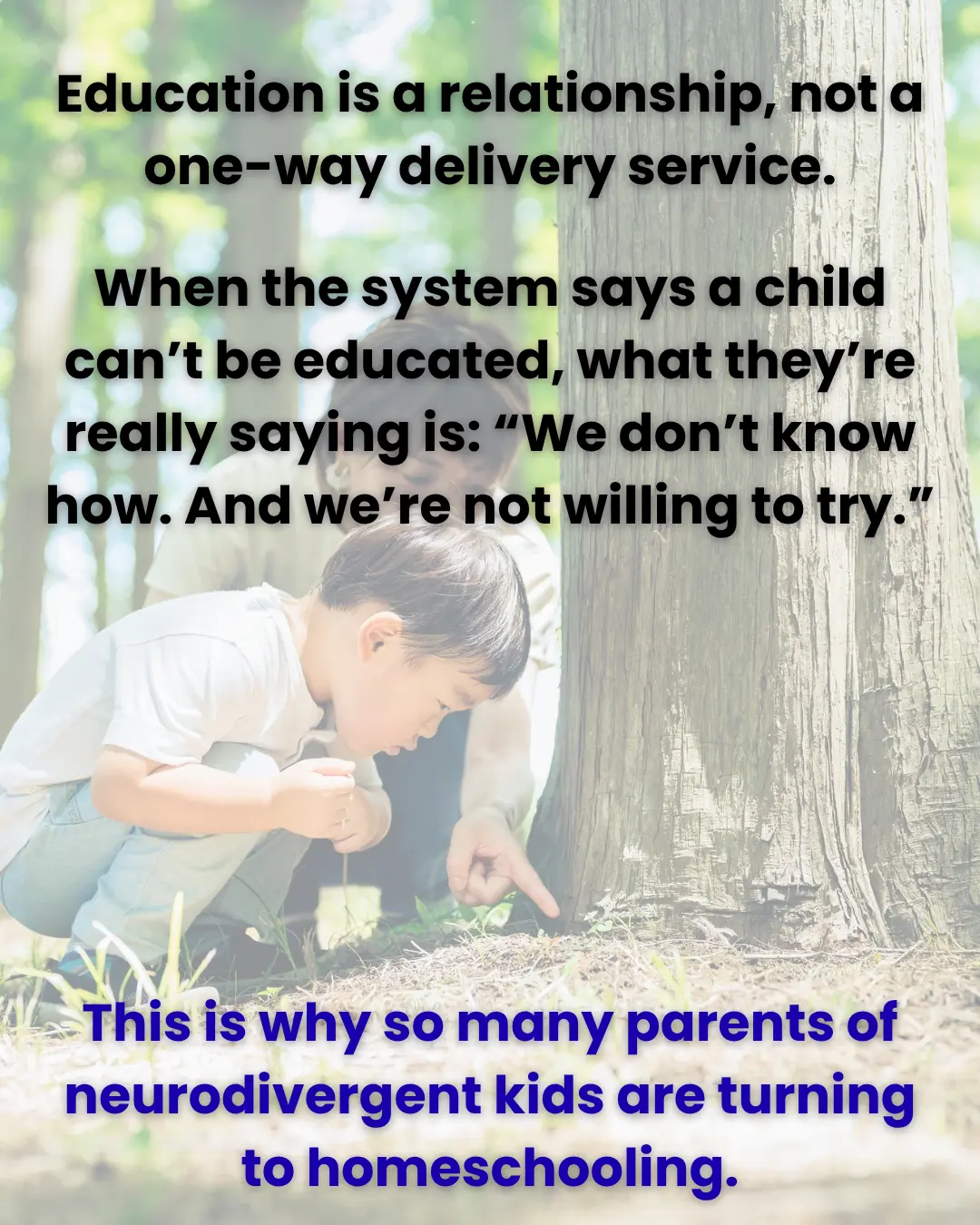
When a teacher — someone trained to unlock potential — says a child can’t be educated, what they’re really saying is: “I don’t know how. And I’m not willing to try.” But no child is uneducable. Some are misunderstood.
Some are neurodivergent.
Some are traumatized.
Some are learning in a way you weren’t trained to see.
Education is a relationship, not a one-way delivery service. It’s not just about curriculum — it’s about care, creativity, and compassion.
What we can’t do is confuse a system’s failure with a child’s inability. The system was never designed to serve every child — especially those who learn differently.
We believe in bad assumptions, outdated frameworks, and a desperate need for empathy in education. Because when you tell a child they’re uneducable, you’re not describing them — you’re indicting yourself.
So the next time a student struggles… pause.
Ask what’s missing.
Ask how you can adapt.
Ask what support might unlock their potential.
Because learning isn’t a light switch. It’s a spark. You just have to be willing to see it.
A home educator dares to imagine an education that matters to the child as a child, not just as an adult in training.” — Julie Bogart
This has been on my mind today…
Somewhere along the way, education stopped being about childhood. It became about adulthood. Test scores. GPAs. College readiness. Career prep.
But what about being ready to be a child?
When I started homeschooling, I thought I was just taking on a different method of schooling. What I didn’t expect was how quickly my kids began to reclaim parts of themselves that had been rushed, quieted, or overlooked.
They became more playful. More curious. They asked more questions. They stopped trying to always be “on” or “perfect” or older than they were.
And I realized something. So much of traditional education is focused on preparing kids for a future life that it forgets they are living one right now.
School culture pushes kids to grow up faster than they’re ready to. To give up play for “coolness” or “serious work”.
They are not adults in training. They are kids. With real thoughts. Real emotions. Real learning rhythms that don’t always fit neat timelines.
Homeschooling gives us the chance to slow it all down.
To build a world around them that says “you matter” without needing to add “when you grow up”, let them rest when they’re tired, and let them chase the weird, wild ideas they can’t stop thinking about.
To let them enjoy learning instead of fearing it.
Let them play.
This doesn’t mean we don’t care about their futures. It means we believe that honoring their present is part of preparing them for it.
I want my kids to grow into capable, wise, thoughtful adults. But I also want them to have a childhood they can look back on with joy — not burnout.
That’s the gift homeschooling gave us. And I’ll never regret choosing it.
Is homeschooling best for my child? What are the positives and drawbacks?
Homeschooling is a topic and form of education that has gained much attention recently, with many parents choosing it over traditional schooling. It is a type of education where children are taught at home by their parents or tutors rather than attending school. Homeschooling offers several benefits but has some drawbacks that parents must consider before making decisions.
The decision to homeschool should be a family decision that involves open communication and discussion. It is essential to involve the child in the decision-making process, as they will be the ones primarily affected by the choice. Parents should also seek the advice and input of other homeschooling families or educational professionals to better understand the advantages and disadvantages of homeschooling and get tips and resources for success.
Advantages to homeschooling.
One of the most significant advantages of homeschooling is that it allows for a more personalized education. Parents can tailor the curriculum to their child’s needs and interests, which can be especially beneficial for children with learning disabilities or those who are gifted. Children can learn at their own pace without the pressure of keeping up with a classroom full of students, which can help them to retain information more effectively.
Personalized education tailored to the student’s needs and interests
More flexible scheduling to accommodate unique circumstances
A safer and more comfortable learning environment free from bullying and negative influences
Homeschooling can provide a more comfortable learning environment.
Homeschooling can also provide a safer and more comfortable learning environment, free from bullying and other negative influences. Parents can control the environment and ensure that their child is not exposed to harmful behaviors or situations. Additionally, homeschooling allows for more flexibility in scheduling, which can be helpful for families with unique circumstances, such as frequent travel, medical concerns, or other unique needs.
What are some drawbacks of homeschooling?
Homeschooling also has some drawbacks that parents should consider before making decisions.
Missed socialization opportunities.
Homeschooled children may miss out on the socialization opportunities of attending a traditional school. They may also lack exposure to diverse perspectives and experiences that can be gained from interacting with a diverse group of peers. Furthermore, homeschooling can be a significant time commitment for parents, who must take on the role of the teacher in addition to their other responsibilities.
Added stress for parents.
From a parent’s perspective, another drawback of homeschooling can be the added responsibility of being the child’s primary teacher, which can be time-consuming and stressful. Additionally, parents may feel isolated or lack support from a community of educators, which can make it more difficult to address challenges or seek guidance. Lastly, homeschooling may require a significant financial investment, including the cost of curriculum materials, resources, and equipment, which may be a barrier for some families.
How can I help my homeschooled child with socialization?
Join a homeschool co-op.
Homeschooling co-ops can be a great way for homeschooled children to socialize and interact with peers their own age. Co-ops are typically organized by homeschooling parents, who come together to provide group learning experiences and social activities for their children. These groups can provide opportunities for children to learn together. While also participating in group projects, and developing social skills in a safe and supportive environment.
Co-ops can also offer benefits to parents, who can share teaching responsibilities and resources. As well as gain support and advice from other homeschooling families. By working together, parents can create a more comprehensive and diverse curriculum for their children. And also provide opportunities for them to explore new topics and interests.
Overall, homeschooling co-ops can be a great way for families to enhance their homeschooling experience. While also providing additional learning and socialization opportunities for their children. However, it is important to carefully research and vet any co-op before joining, to ensure that it aligns with the family’s educational goals and values.
How can I manage as a homeschooling parent?
Homeschooling can be a challenging but rewarding experience for parents who choose to take on the role of teacher. Here are some tips for managing homeschooling:
Establish a routine: Set a schedule for each day that includes time for learning, breaks, and other activities. Stick to the routine as much as possible, but also be flexible when necessary.
Plan ahead: Create lesson plans and activities in advance, and keep a record of what has been covered. This can help to ensure that all necessary topics are covered and can also make it easier to track progress.
Use a variety of resources. There are many different resources available for homeschooling, including textbooks, workbooks, online courses, and educational videos. Use a mix of resources to keep things exciting and engaging for your child.
Get creative: Homeschooling presents an opportunity to be creative and flexible in your approach to education. Consider incorporating hands-on activities, field trips, and other experiential learning opportunities into your child’s education.
Homeschooling can be isolating, so it is important to seek support from other homeschooling families or online communities. Joining a co-op or attending homeschooling events can also provide opportunities for socialization and support.
Take breaks: Homeschooling can be intense, so it is essential to take breaks and recharge. Make time for self-care and relaxation, and don’t be afraid to take a day off when needed.
By following these tips and being flexible, parents can successfully manage homeschooling and provide a high-quality education for their children.
Important checklist before making the decision to homeschool.
Ultimately, the decision to homeschool a child should be based on what is best for the individual child and family. Parents should consider their child’s learning style, interests, and socialization needs, as well as their capabilities and availability. It is also important to research state and local homeschooling laws and regulations to ensure compliance.
Here are some points parents should consider before homeschooling:
The child’s learning style, interests, and socialization needs
The parent’s capabilities and availability
State and local homeschooling laws and regulations
The pros and cons of homeschooling, including its advantages and disadvantages
The child’s age and grade level, as well as their future educational goals and plans
The availability of resources and support, such as homeschooling co-ops or online communities
Homeschooling can be a viable option for some families, but it is not necessarily the best choice for everyone. Parents should carefully weigh the pros and cons before making any decisions about their child’s education. With proper planning, preparation, and research, homeschooling can be a successful and rewarding experience for both parents and children.