If You Want Your Child To Be Social, Do Not Homeschool.

If You Want Your Child To Be Social, Do Not Homeschool.

This has been on my mind today…

I still see this stereotype floating around.

If you want your child to be social, do not homeschool.

It is an old argument built on an outdated picture of what homeschooling looks like.

The idea assumes that socialization only happens in a classroom of same age peers, sitting in rows, moving together by bell schedule. That is not how real life works. Adults are not grouped by birth year. We collaborate across ages, backgrounds, and interests every day.

Modern homeschooling rarely looks like isolation.

Kids are in co ops, sports teams, music groups, church communities, neighborhood pods, volunteer programs, online collaborations, and microschools. Many interact with more diverse age groups than they would inside a single grade classroom.

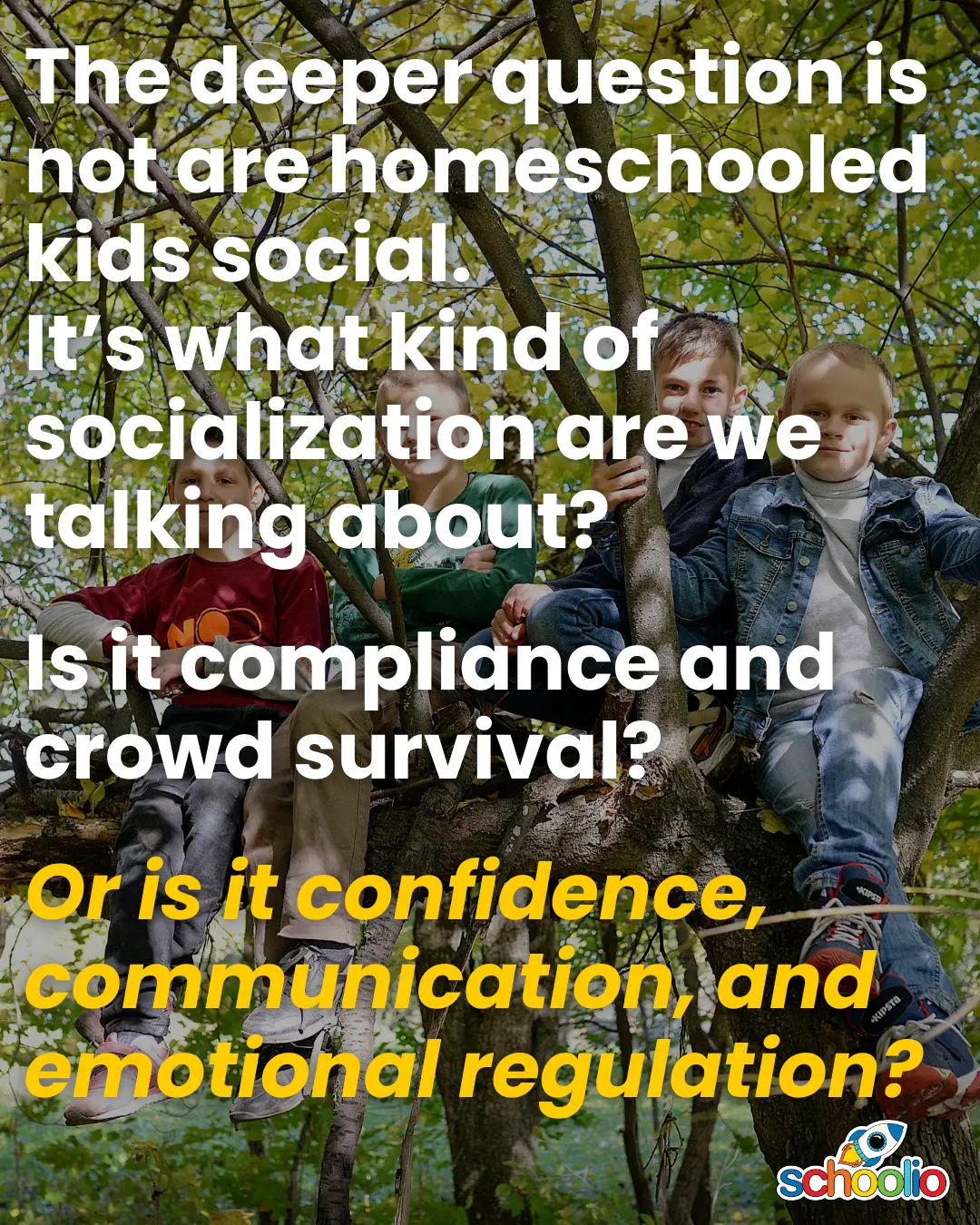
The deeper question is not are homeschooled kids social.

It is what kind of socialization are we talking about.

Is it compliance and crowd survival?

Or is it confidence, communication, and emotional regulation?

I have seen kids who struggled in traditional school labeled antisocial. In reality, they were overwhelmed. Remove the rigidity. Adjust the pace. Give them agency. They open up.

Homeschooling is not anti social. It is intentional social.

The stereotype lingers because it is easy. The reality is more nuanced.

Sathish

still learning, still unlearning

Source: **https://thegatewayonline.ca/2026/02/how-to-be-a-social-person-dont-homeschool/**


But What About Socialization? (Let’s Talk About It.)

But What About Socialization? (Let’s Talk About It.)


Ah yes… the classic question that every homeschooler has heard (probably a few dozen times):

“But… what about socialization?”

It’s asked by grandparents. Aunts and uncles. Curious friends. Grocery store strangers.

And yes, we’ve seen the memes. We’ve done the eyerolls. We’ve even — on occasion — offered a snarky reply.

But truthfully? I don’t mind the question. I like giving people a better picture of what homeschooling really looks like.

And when it comes to socialization, I answer it in two parts — because most people are actually asking the wrong thing.


?️ Part 1: Yes, My Kids Socialize

Let’s start with the easy answer.

Do my kids spend time with other kids?

Do they have friends? Go to activities? Go on field trips?

YES. Yes. And yes.

My kids were always part of our local homeschool group.

Here’s what my kids do with their homeschool group:

  • Soccer
  • Gymnastics
  • Swimming
  • Skating
  • Art lessons
  • Track and field
  • Academic co-op (monthly)
  • PE co-op (twice a month in winter)
  • Holiday parties & themed events
  • Weekly summer park meetups
  • 3 field trips per month (far more than they ever got in public school!)

And best of all — these are the same kids they see over and over again. The friendships are deep and real. The connections are consistent. The community is strong.

We even text each other to coordinate sign-ups for events, just like any other friend group would.

So yes. My kids socialize. A lot.


? Bonus Perk: Our Evenings and Weekends Are Peaceful

Because our extracurriculars happen during the day (with our homeschool group), we’re not cramming activities into busy evenings or rushing around on weekends.

We eat dinner together.

We go to bed at reasonable times.

We rest.

Homeschooling has given us the gift of balance — and that’s good for everyone’s mental health.


? Part 2: Let’s Talk About Socialization (The Real Kind)

Now for the word people use… without really understanding it.

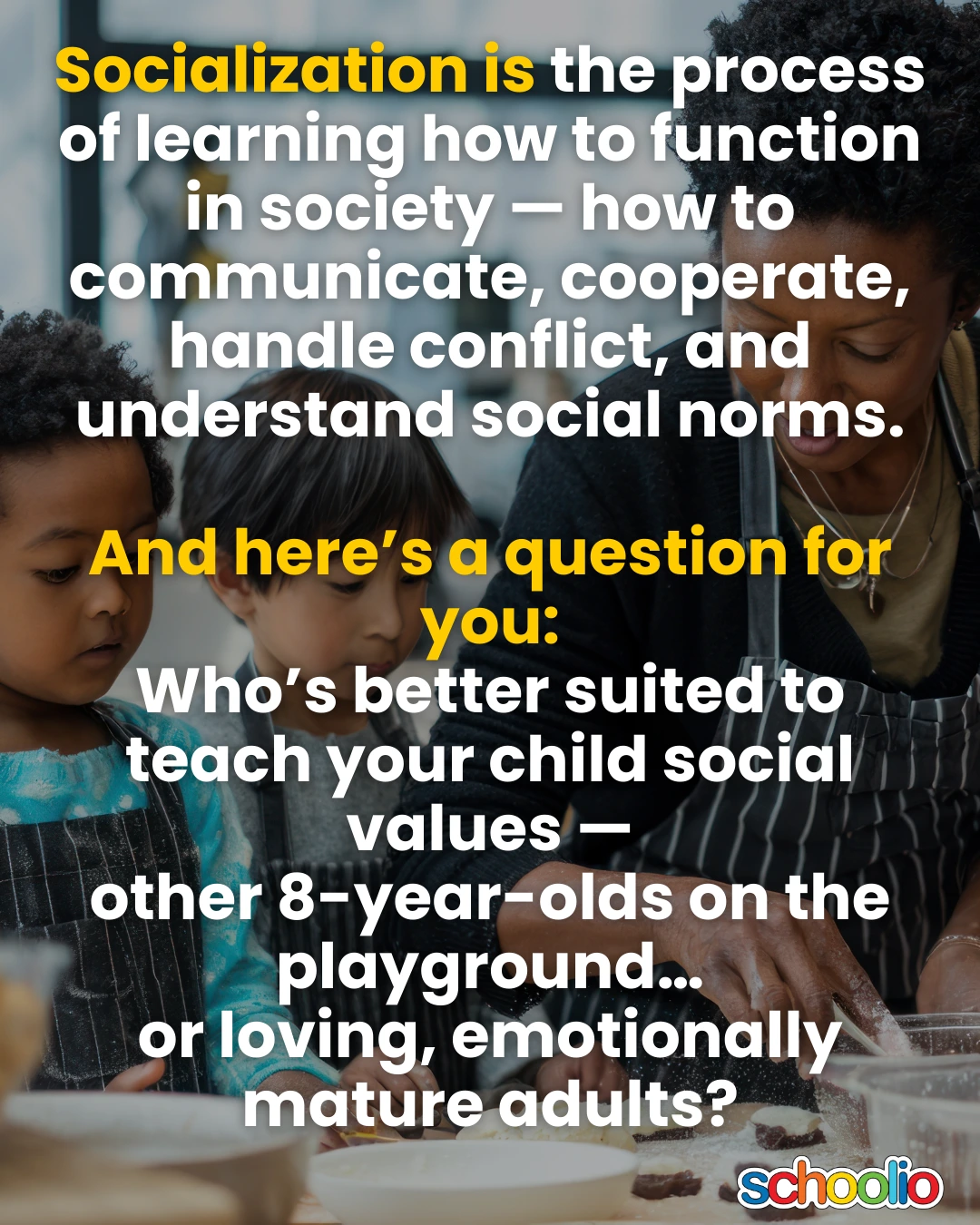
Socialization is the process of learning how to function in society — how to communicate, cooperate, handle conflict, and understand social norms.

And here’s a question for you:

Who’s better suited to teach your child social values —

other 8-year-olds on the playground…

or loving, emotionally mature adults?

When my child is at a homeschool event and has a conflict with a friend, they can come to me right away for support and coaching.

I help them understand the situation, plan a response, and reflect on how it went.

That means they’re learning social skills in real time, with guidance.

It’s not “helicopter parenting.” It’s real mentorship.

The result? Even very young homeschooled kids learn to resolve conflict with kindness and maturity.


? Homeschooled Teens Are (Surprise!) Really Cool

If you’ve ever had a full conversation with a homeschooled teen, you know what I mean.

They’re articulate.

Confident.

Curious.

Engaging.

Not sullen or withdrawn. Not afraid to talk to adults. Not obsessed with fitting in. Just… lovely humans.

No weird stereotypes. No Stepford vibes. Just kids who’ve had space to grow up at their own pace, in their own way.


? Public School Culture Is Not the Social Utopia People Think It Is

Yes, some kids enjoy the social side of school.

But many don’t — and for good reason.

Here’s what socialization looks like in most public schools:

  • Friend groups sorted by birth year only (not interest or personality)
  • Pressure to conform or risk bullying and isolation
  • Toxic norms that teach kids not to trust or confide in adults
  • A culture where “fitting in” > being yourself

Even kids who succeed socially often do so by constantly managing their behavior to meet those unwritten rules — and it’s exhausting.

We wonder why so many kids are anxious. But is it any surprise when the stakes of every interaction feel this high?


?‍♀️ “But School Prepares Them for the Real World…”

Here’s the thing:

Being trapped in a toxic environment with no way out is not “real world prep.”

Yes, adults deal with difficult coworkers. But as adults, we have:

  • Control over our environment
  • Emotional regulation
  • Resources
  • Options

Children don’t.

When a kid is being bullied at school, school is their entire world.

They often feel trapped, unsupported, and completely alone.

That’s not “character building.” That’s trauma.


✅ So Let’s Wrap It Up

Do my kids socialize? Yes. Joyfully, regularly, and with a diverse group of friends.

Are they socialized? Yes. In ways that are healthy, supported, and guided by loving adults.

And honestly?

They’re thriving — not despite homeschooling, but because of it.


Lindsey

Certified Special Ed Educator & Co-Founder, Schoolio
Why Parents Are Turning To Homeschooling

Why Parents Are Turning to Homeschooling

The other day, I was at a dentist’s appointment with my kids. While we were there, the secretary asked my daughter if she enjoyed the morning off school to be at the dentist. My daughter responded with a “no” because she despises dentist’s appointments. I followed up the question with, “We will be doing school when we are home as we homeschool.” She looked at me with disbelief and said, “You homeschool? How could your children be socialized then? With online learning, children were struggling with isolation and lack of socialization.” I then went into a long explanation about how homeschooling is far from isolation learning. She still looked confused, as many people do when they wonder why parents are turning to homeschooling as their education choice. 

Here’s why parents are turning to homeschooling:

After two years of the pandemic and homeschooling becoming a norm in education, I shouldn’t still have to give explanations to strangers about my children’s social lives. Yet, that remains one of the most common questions I receive. The world needs to subscribe to the Schoolio Blog and read blogs like Socialization and Homeschooling. One thing that might interest you about homeschooling is that socialization is one of the main reasons why parents are turning to homeschooling as their preferred education method.

Homeschooling improves children’s social skills and interactions.

One of the most important reasons why parents are turning to homeschooling is because of healthy socialization. When homeschooled, children have much less exposure to peer pressure and bullying. Homeschooled children are also able to have more customized social interactions. Additionally, most children in the public school system spend hours in classrooms listening to teachers. In comparison, homeschooled children have many more opportunities for learning activities outside of the home.

A flexible homeschooling curriculum means homeschool families have more opportunities to participate in fun activities. Some of which include: museum trips, park playdates, community service activities, art classes, and track and field days.

Using a flexible homeschool curriculum and making homeschooling a lifestyle significantly improves emotional and psychological development in children. While also strengthening family connections and connections with other homeschooled children.

Homeschooling means having access to higher quality education.

Many parents believe that the quality of education is not what it once was. With a decline in the education budget, increased student enrolment, large class sizes, burnt-out teachers, and other factors. Parents feel that homeschooling gives them more control over their children’s learning. In 2015, long before the pandemic and the devastating effects on children’s education, a Career and College Readiness Survey showed shocking results. These results indicated that less than half of high school students feel academically ready for college.

Interrupted education, overcrowded classrooms, and fewer resources have made it extremely difficult for teachers to provide one-on-one instruction to students. When homeschooling, parents can use a curriculum that follows learning standards while also offering personalized education to their child, which is so often missing in today’s learning venues.

Homeschooling can support a child with diverse learning needs.

Unfortunately, children with learning disabilities or even physical disabilities have difficulty thriving in a traditional learning environment. Many schools don’t have adequate resources and time available to support children with diverse learning needs. Additionally, formal education is a one size fits all model when we all know that one size fits nobody. Having a customizable curriculum and a flexible learning environment is essential for children with diverse learning needs.

Homeschooling means educational stability.

Even before the pandemic began, there were teacher strikes, bad weather and many other reasons students were forced to miss class. Homeschooling means educational stability for many students as they have that flexible learning solution and learning lifestyle that keeps them learning even when schools are not in. Many homeschooling parents (who were homeschooling before the pandemic) were thankful that they had chosen that educational path for their children, as homeschooling offered much-needed stability to their days.

Homeschooling means better educational results.

It might shock you that homeschooled children often score better on federal standardized tests than their public school peers. Brian Ray of the National Home Education Research Institute showed that homeschooled children often achieve much higher results. Regardless of parents’ income or teaching experience.

Homeschooling offers student-athletes and musicians a flexible education option.

Many student-athletes have intense travel and practice schedules. Additionally, many students who participate in fine arts, theatre, or music need time to rehearse and perform. These students need a flexible education option that will work around their busy schedules.

Homeschooling offers a learning environment that children enjoy.

Unfortunately, many public school children feel stressed over the volume of homework and the lack of instruction. Many children don’t thrive in environments that are high stress, where they are required to memorize and keep up with their peers around them. This popular model of education doesn’t cater to the majority of students. Learning should be fun and engaging, not blank and stressful. Homeschooled parents report that they have much more time during their day to incorporate fun activities and hands-on lessons that encourage learning.

Should you homeschool?

Even though many think homeschooling is a terrible option, as the secretary at the dentist did, the reality is that homeschooling can be an excellent option for many families. But is it the right choice for your family? Ask yourself these questions:

  • Does my family need more flexibility?
  • Do I want to give my children and myself the freedom to choose?
  • Would I like to be more involved in my child’s education?
  • Is my child struggling academically?
  • Does my child need more positive social experiences?
  • Are there affordable homeschool curriculums available?
  • Does my work schedule permit this choice for my family?

If you answered yes to more than two of these questions, then homeschooling might be an excellent option for your family. Remember, there are many families and experts available to help guide you through the process of homeschooling, like the caring staff at Schoolio Learning, that wants you to excel on your homeschooling journey. If homeschooling seems like the best option for your family, but you aren’t sure where to start – please reach out to us, and we can help set you and your family up for success.

Can you travel and homeschooling? Check this out.

Check out our one-of-a-kind homeschooling curriculum.