To the Weak, Everything Feels Like a Threat

To the Weak, Everything Feels Like a Threat


This has been on my mind today…


Every time education shifts forward, fear gets louder.

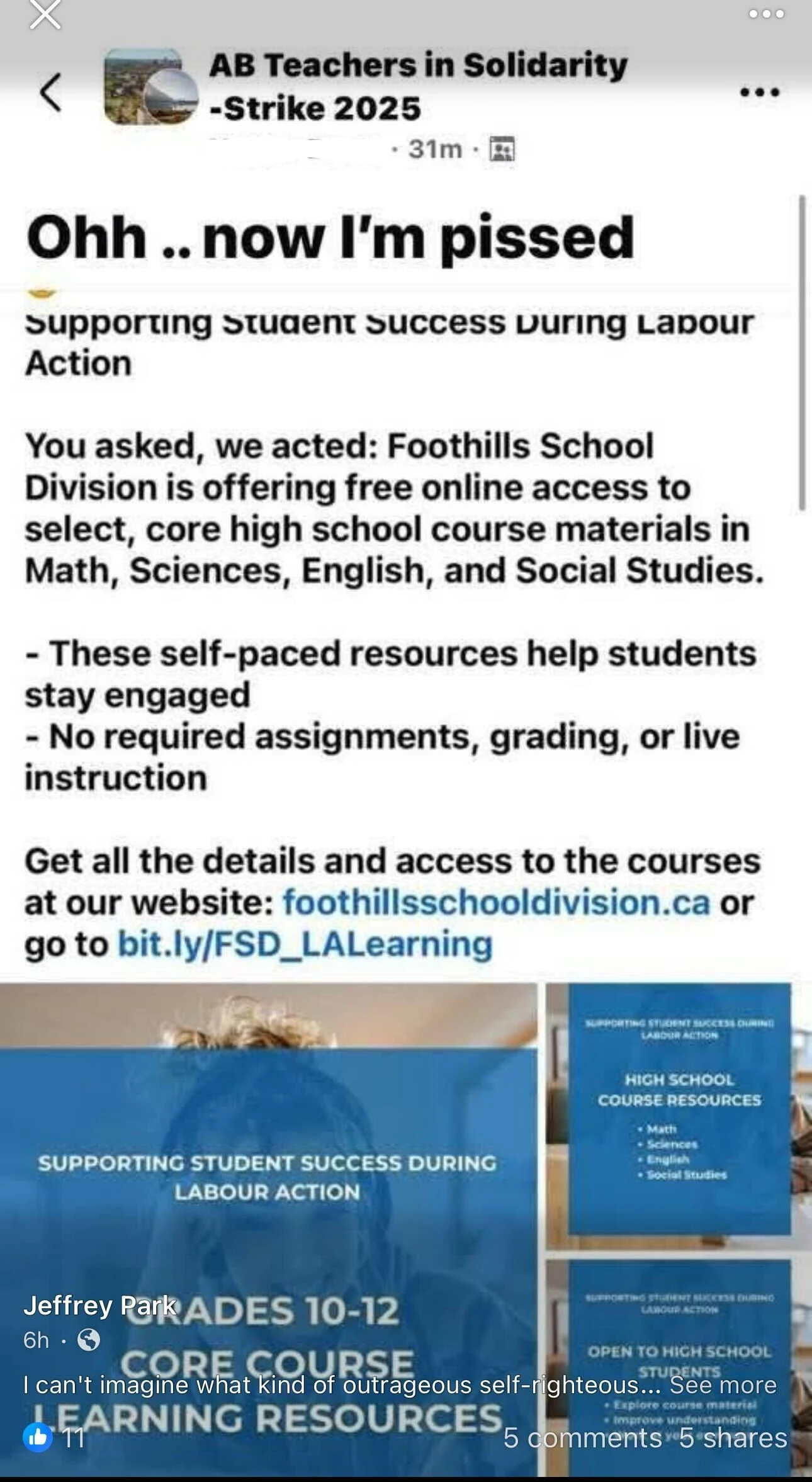
Teachers are angry that families are exploring alternatives during the Alberta strike. Some are even calling parents “disloyal” for turning to online resources. But let’s be honest — what else are families supposed to do when the system stops working?

The truth is, teachers are afraid. And I get it. They’ve been handed an impossible job inside a system that hasn’t evolved in 150 years. A system built for industrial workers, not creative thinkers. For compliance, not curiosity.

AI. Homeschooling. Microschools. Digital curriculum.

All of it is growing — fast.

And instead of seeing these tools as extensions of learning, too many educators see them as enemies.

Here’s the reality:

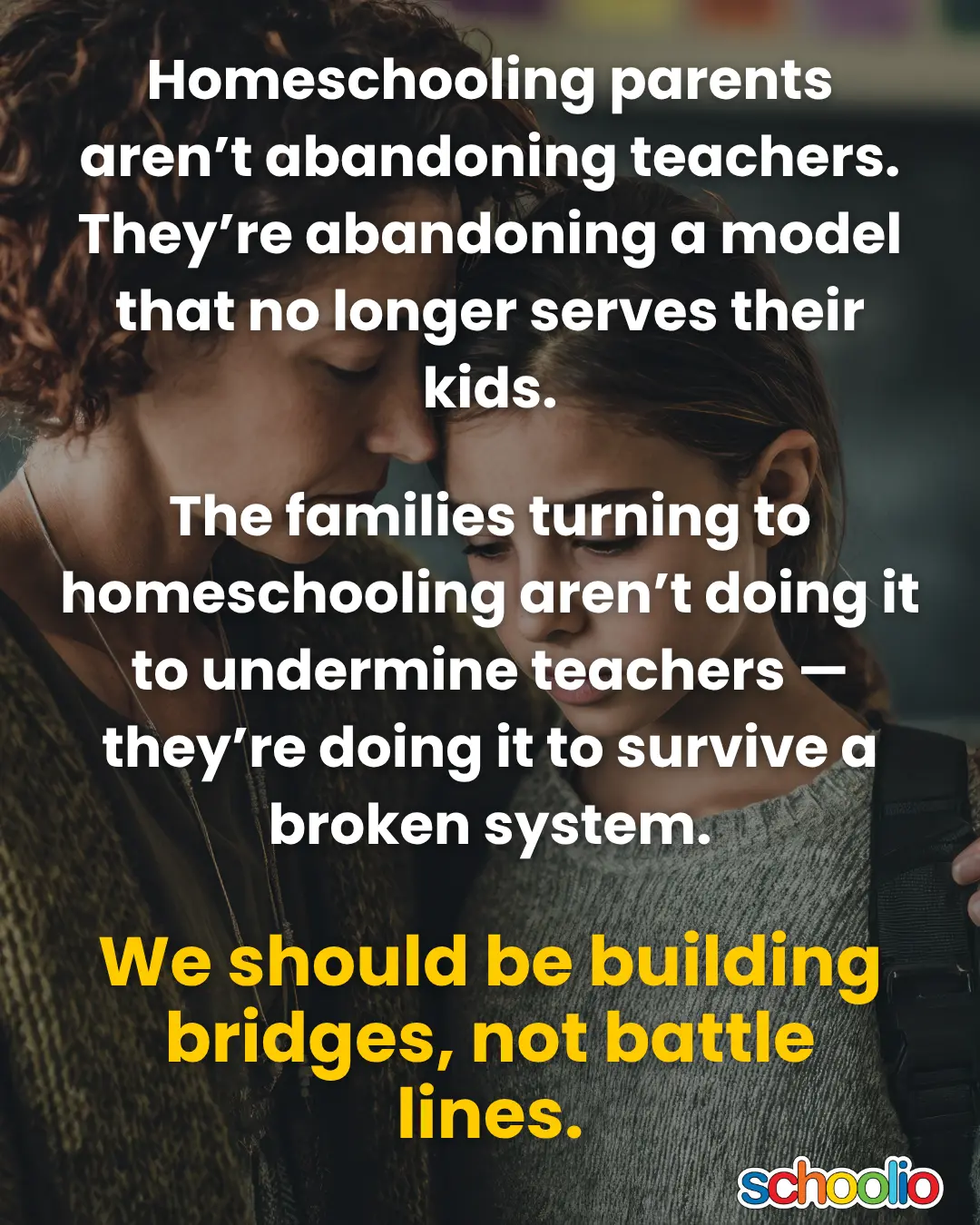
Parents aren’t abandoning teachers. They’re abandoning a model that no longer serves their kids.

Innovation in education isn’t an attack. It’s an answer.

The families turning to homeschooling or digital learning aren’t doing it to undermine teachers — they’re doing it to survive a broken system.

We should be building bridges, not battle lines.

Technology and teachers can coexist. But that requires courage — the kind that looks at change and says, “Let’s learn from it.”

Because the future of education won’t be built by those defending the old ways. It’ll be built by the ones bold enough to imagine new ones.

Alberta


Sathish
Still learning, still unlearning

Worried Homeschooling Is Too Expensive? Here’s Your Defense Over the Costs

Worried Homeschooling Is Too Expensive? Here’s Your Defense Over the Costs


Yes, homeschooling has costs — but so does public school. The difference? You control what you spend and why.

I hear from parents considering homeschooling all the time…

“I want to start homeschooling… but what if I just can’t afford it?”

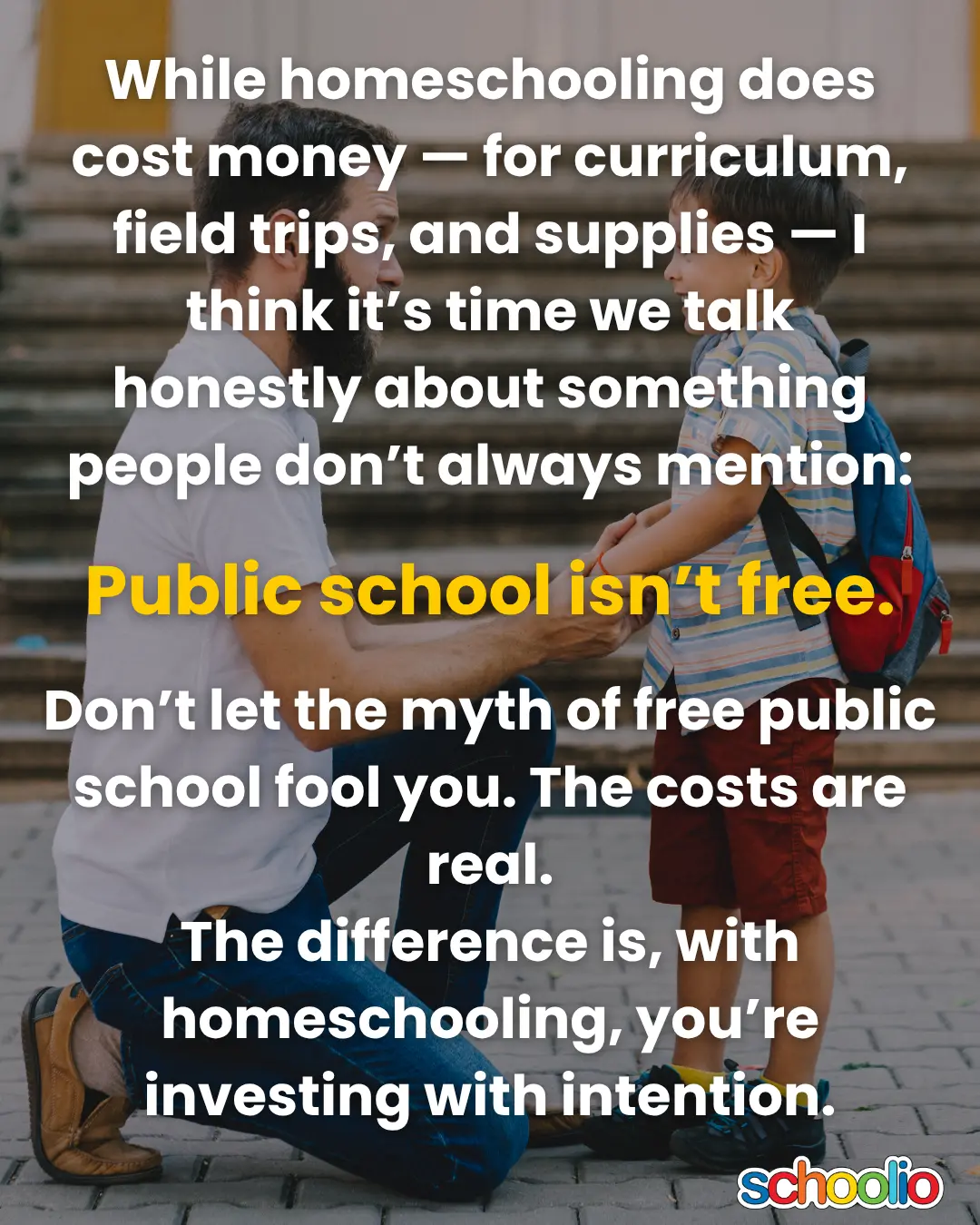
It’s a fair question. And while homeschooling does cost money — for curriculum, field trips, and supplies — I think it’s time we talk honestly about something people don’t always mention:

? Public school isn’t free.

The truth is, both paths have costs. But with homeschooling, you get to decide what you buy and how much you spend, based on your values and your child’s needs — not what’s written on a school form or fundraiser sheet.

Let’s break it down.


? How Much We Spend on Homeschooling

If you’ve met me, and a lot of you have, you probably know I’m an incurable Type-A planner. We also homeschooled our two kids on one income, as I know many of you are as well. For several years I tracked everything that was homeschool related, so I knew exactly how much we were spending on:

  • Curriculum
  • Field trips
  • Supplies
  • Anything we wouldn’t have spent otherwise if they were in school

But here’s the kicker…


vs. What We Spent in Public School (Hint: It Was More)

This spending tracking didn’t begin with homeschooling though- back when my kids were in public school, I also tracked our spending. Those years?

We spent almost $100 more per childfor free public school.

Here’s where that money went:

  • Back-to-school supplies (the specific ones required)
  • Indoor shoes, gym clothes, weather gear – and clothing replacements when they are lost and stolen
  • School events: BBQs, fairs, pizza day, candy cane day, milkshake day…
  • Valentines, classroom parties, book fairs, teacher gifts
  • Hot lunches and fundraiser purchases
  • Fad items and brand names your kids have to have in order to not be bullied

We weren’t even high-participation parents! We did just enough that our kids didn’t feel left out, but not every event or lunch or fundraiser.

And still? It added up.


? The Big Difference with Homeschooling: You’re in Control Now

Homeschooling gives you something public school doesn’t:

Control over what you spend — and what you get for it.

You decide:

  • Which curriculum to invest in (or whether to build your own)
  • How often you take field trips
  • Whether you spend more time or more money — whichever fits your family
  • What supplies, tools, or extras actually matter in your homeschool

You’re not just handing money over for a pizza party you didn’t ask for.

You’re choosing what best supports your child’s growth — and your family’s goals.


? Homeschooling Can Work on a Budget

You’ll spend either money or time — or some combination of both.

The beauty is: you get to choose what’s worth it.

Whether you’re middle-of-the-road spenders, doing things ultra-minimally with free resources and DIY everything, or have some room to buy back more time — there’s no one “right” budget for homeschooling.

But don’t let the myth of free public school fool you. The costs are real.

The difference is, with homeschooling, you’re investing with intention.

Lindsey

Certified Special Ed Educator & Co-Founder, Schoolio

“Not Educable”? Or Just Not Understood?

“Not Educable”? Or Just Not Understood?


This has been on my mind today…


I was in a private “teachers only” Facebook group recently — don’t ask me how I got in ? — and one comment stopped me cold.

“Some of these kids just aren’t educable.”

It triggered me. Deeply.

Because I’ve been that kid.

Because I’ve raised a child labeled “lazy” for not learning the way others expected.

Because I’ve built a company, Schoolio, for the very kids traditional systems are too quick to write off.

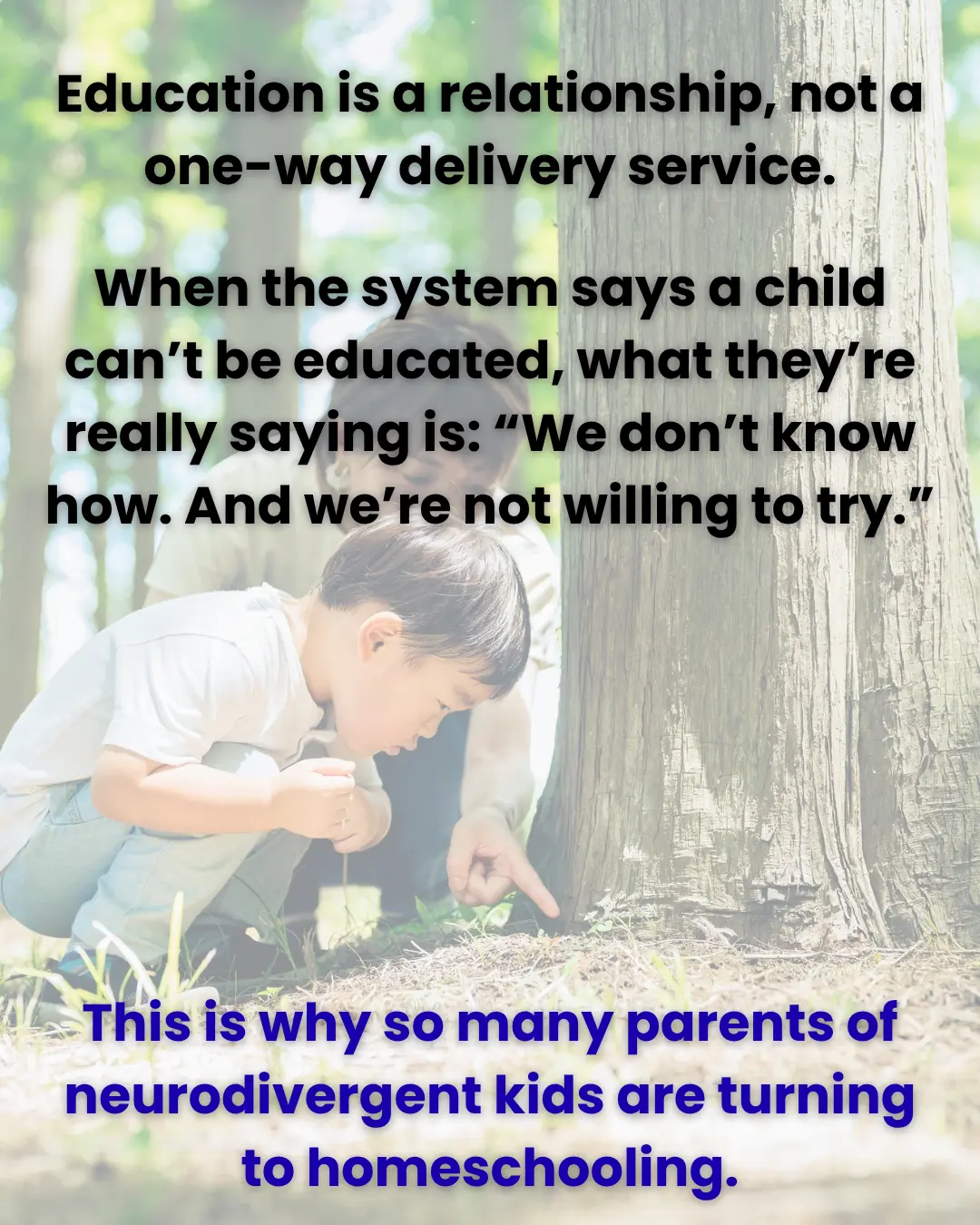
When a teacher — someone trained to unlock potential — says a child can’t be educated, what they’re really saying is: “I don’t know how. And I’m not willing to try.” But no child is uneducable. Some are misunderstood.

Some are neurodivergent.

Some are traumatized.

Some are learning in a way you weren’t trained to see.

Education is a relationship, not a one-way delivery service. It’s not just about curriculum — it’s about care, creativity, and compassion.

What we can’t do is confuse a system’s failure with a child’s inability. The system was never designed to serve every child — especially those who learn differently.

And that’s why Schoolio exists.

We don’t believe in “bad kids.”

We believe in bad assumptions, outdated frameworks, and a desperate need for empathy in education. Because when you tell a child they’re uneducable, you’re not describing them — you’re indicting yourself.

So the next time a student struggles… pause.

Ask what’s missing.

Ask how you can adapt.

Ask what support might unlock their potential.

Because learning isn’t a light switch. It’s a spark. You just have to be willing to see it.


Sathish
Still learning, still unlearning


Unlearning School: What Homeschooling Helped Me See Differently About Education

Unlearning School: What Homeschooling Helped Me See Differently About Education

By Sathish Bala

This has been on my mind today…

When I look back at my own schooling in Singapore during the 1980s, I realize how much of it was built around conformity. A student’s worth was tied to a test score. Our futures were determined by how well we followed instructions, memorized content, and stayed in our seats. That system didn’t see who we were. It only saw what we could produce.

So much of homeschooling — for me, and for the thousands of families I’ve now spoken with — is really about unlearning that model.

At first, most parents try to recreate school at home. Schedules. Desks. Checklists. But slowly, over time, the shift happens. We stop asking, “Am I doing enough?” and start asking, “Is my child curious? Are they feeling safe enough to learn at their own pace?”

We realize that learning doesn’t have to look like sitting still. It can be messy, playful, deeply personal. Sometimes that realization comes from the chaos — the days when nothing goes according to plan, and you see your child learning anyway. Sometimes it comes from joy.

One mom who just started her free trial with Schoolio shared this incredible moment with us:

“I just signed up for a free trial and had my neurodivergent son test out a lesson in Social Studies, a subject he has not previously enjoyed. Until now! He enjoyed the lesson so much he was asking me to please print the PDFs for him to work on, which he also never does. I think this is a very good sign and look forward to him completing other lessons!”

This is the kind of learning traditional school often misses. For many kids, especially neurodivergent learners, subjects like Social Studies or Language Arts become walls instead of doors. But when the format changes — when they get space to go at their pace, explore topics through different modalities, or simply feel like they’re being listened to — everything opens up.

Homeschooling has helped me see that education isn’t about information delivery. It’s about connection. It’s about nurturing curiosity and self-awareness. It’s about teaching kids how to learn, not just what to memorize.

And that’s what public school often forgets — it’s not just the curriculum that needs change. It’s the entire culture. At Schoolio, we believe deeply in giving families the tools to break that culture, and build something better.

Because when we unlearn school, we begin to see learning everywhere.

Sathish

still learning, still unlearning

Alternative Education Options: Lessons Learned

Exploring alternative education options has become a significant trend among families seeking the best possible educational paths for their children. One family’s journey through homeschooling and microschools in Virginia reveals valuable lessons that can guide others considering similar paths.

One of the standout benefits of alternative education is the flexibility it offers. Traditional schooling often features rigid schedules and curricula that may not accommodate every child’s unique learning pace and interests. In contrast, homeschooling and microschools provide the adaptability necessary to tailor the educational experience to each child’s needs. This flexibility allows families to incorporate breaks when necessary, delve deeper into subjects of interest, and adjust the learning pace to suit each child’s capabilities.

According to Schoolio, “Flexibility is one of the cornerstones of effective homeschooling, allowing children to learn at their own pace and explore their interests deeply.” This adaptability can be especially beneficial for children who may struggle with the constraints of a traditional classroom environment, enabling them to flourish academically and personally.

Personalized learning has proven to be a game-changer for many families. In traditional school settings, the one-size-fits-all approach often leaves some children disengaged or struggling to keep up. Alternative education options, such as homeschooling, allow for designing a curriculum that caters specifically to a child’s strengths and interests. This customization keeps children engaged and motivated, turning learning into an enjoyable and rewarding experience. One Schoolio user shared, “Schoolio’s tailored curriculum has transformed our homeschooling experience. My child is more engaged and excited about learning than ever before.” Personalized learning not only enhances engagement but also helps children develop a deeper understanding of subjects, as they are able to explore topics that genuinely interest them.

A common concern about alternative education is the potential for social isolation. However, many families discover a robust and supportive community of like-minded individuals. Homeschool groups, co-ops, and online forums provide ample opportunities for children to interact with peers, share experiences, and participate in group activities. These communities also offer parents a network of support and resources, making the homeschooling journey less daunting and more collaborative. Platforms like Schoolio provide forums where homeschooling families can connect, share resources, and support each other, creating a community of encouragement and shared learning. Engaging with these communities can help mitigate feelings of isolation and provide valuable insights and advice from other experienced homeschooling parents.

Alternative education opens the door to numerous real-world learning opportunities. Field trips, nature walks, and hands-on projects become integral parts of the educational approach. These experiences help children connect theoretical knowledge with practical applications, enhancing their understanding and retention of information. Activities such as gardening, cooking, and volunteering also teach valuable life skills that go beyond academic learning. Schoolio’s curriculum includes practical activities that integrate real-world learning, helping children apply what they learn in meaningful ways. For example, a science lesson on plant biology can be enriched by a gardening project, where children can observe plant growth and understand the scientific concepts firsthand.

Finding the right balance between structure and freedom is essential. While flexibility and freedom are significant advantages of alternative education, some structure is necessary to maintain consistency and progress. Setting goals, establishing routines, and using structured curricula for core subjects help families stay on track while allowing room for exploration and creativity. Schoolio’s digital platform offers customizable lesson plans that provide a structured framework while allowing for the flexibility to adapt as needed. This balance ensures that children receive a comprehensive education while still enjoying the benefits of a personalized learning experience.

One of the most rewarding aspects of the alternative education journey is the strengthening of family bonds. Spending more time together through homeschooling and alternative education initiatives allows families to connect on deeper levels. Parents become mentors and partners in their children’s learning journeys, fostering better communication, understanding, and mutual respect within the family. One Schoolio customer noted, “The bond we’ve developed through homeschooling is priceless. Schoolio’s resources have made our educational journey a collaborative and joyful experience.” The close-knit environment of homeschooling can lead to lifelong relationships and a supportive family dynamic that benefits everyone involved.

The journey of alternative education is not without its challenges. Balancing work, teaching, and household responsibilities requires careful planning and time management. Families may face skepticism and criticism from some quarters, questioning the effectiveness of non-traditional education paths. However, support from the community and the visible progress and happiness of the children often reinforce the decision. Schoolio offers various resources and support systems to help families navigate these challenges, from educational consultants to community forums. These resources provide guidance and practical solutions to common homeschooling obstacles, ensuring that families have the support they need to succeed.

Technology plays a pivotal role in the alternative education journey. Online resources, educational software, and digital platforms expand the teaching toolkit and provide diverse learning opportunities. Platforms like Schoolio offer customizable curricula, interactive lessons, and a community of support that enriches the homeschooling experience. One satisfied Schoolio user shared, “Schoolio’s interactive digital platform has made homeschooling both fun and effective. The variety of resources available has greatly enriched our learning experience.” By leveraging technology, homeschooling families can access a wealth of information and tools that enhance their educational efforts.

Perhaps the most significant lesson learned is the importance of confidence. Embracing alternative education requires belief in one’s ability to provide a quality education for their children. Moments of doubt and uncertainty are natural, but trusting instincts and seeing the positive impact on children’s development can reaffirm the choice. Confidence in the approach empowers families to create nurturing and effective learning environments. Schoolio reinforces this confidence by providing comprehensive tools and support, helping parents feel equipped and capable in their homeschooling journey. With the right resources and mindset, parents can overcome any obstacles and provide a fulfilling education for their children.

Exploring alternative education options has been a transformative journey for many families. The immense benefits of flexibility, personalized learning, community support, and real-world experiences make a significant difference in children’s education. While the path has its challenges, the rewards are profound, enriching children’s education and strengthening family bonds. For those considering alternative education, exploring the possibilities is encouraged. Each child is unique, and finding the right educational approach can make all the difference in their learning journey. With resources like Schoolio, the support of a community, and the courage to embrace new methods, families can provide a fulfilling and dynamic education for their children.

Alternative education is not just an option but an opportunity to redefine what learning can look like for your family. The lessons learned along the way, from flexibility to personalized engagement, are invaluable. As more families turn to homeschooling and other alternative methods, the landscape of education continues to evolve, offering a wealth of possibilities for those willing to explore them.