
Why Your ADHD or Autistic Child “Practices” Conversations (and Why That’s Not a Bad Thing)

Why Your ADHD or Autistic Child “Practices” Conversations (and Why That’s Not a Bad Thing)


Have you ever noticed your child repeating the same sentence over and over before a phone call?

Or whispering what they’re going to say before walking into a room?

Or replaying conversations long after they’re over, worrying they said the “wrong” thing?

If so, you’re likely seeing scripting — a very common and very human coping strategy for autistic and ADHD kids.

And no, it’s not something you need to stop or “fix.”


What Is Scripting, Really?

Scripting is when someone mentally rehearses words, phrases, or entire conversations ahead of time. For neurodivergent kids, especially autistic and ADHD kids, it’s a way to prepare for social situations that feel unpredictable, overwhelming, or high-stakes.

Think of it like this:

Most people can improvise socially without much effort. For neurodivergent kids, social interactions often require conscious processing. Tone, timing, facial expressions, word choice — it’s a lot to manage all at once.

Scripting helps reduce that load.


Why Neurodivergent Kids Script

Scripting isn’t about being robotic or inauthentic. It’s about safety.

Many ADHD and autistic kids have experienced:

  • Being misunderstood
  • Saying the “wrong” thing and being corrected or teased
  • Feeling embarrassed or rejected after social interactions

Over time, their brains learn: Preparation feels safer than guessing.

Scripting gives them:

  • A sense of control
  • Predictability in an unpredictable world
  • Time to organize thoughts before speaking
  • A way to reduce anxiety before social demands

For some kids, scripting is the difference between engaging socially and avoiding it altogether.


What Scripting Feels Like for Kids

From the inside, scripting often feels like:

  • “If I practice, I won’t mess this up.”
  • “If I know what to say, I won’t get in trouble.”
  • “If I’m prepared, I’ll be less embarrassed.”

It’s not about manipulation or performance — it’s about self-protection.

And for kids who already struggle with emotional regulation, rejection sensitivity, or social anxiety, that protection matters.


When Scripting Is Helpful

Scripting can be incredibly supportive when it:

  • Reduces anxiety before social interactions
  • Helps kids advocate for themselves
  • Allows them to participate when they otherwise might shut down
  • Builds confidence through successful interactions

Many kids use scripting to:

  • Practice greetings
  • Prepare for phone calls
  • Navigate classroom discussions
  • Rehearse how to ask for help

In these cases, scripting is a tool, not a problem.


When Scripting Can Become Stressful

Like any coping strategy, scripting can become overwhelming if it turns rigid.

Some kids may struggle when:

  • Conversations don’t follow the “planned” path
  • Someone responds unexpectedly
  • They feel pressure to say things exactly right

When that happens, you might see:

  • Increased anxiety or shutdowns
  • Frustration when plans change
  • Avoidance of social situations altogether

This doesn’t mean scripting caused the problem — it means the need for safety is still very high.


How Parents Can Support Scripting (Without Making It Worse)

The goal isn’t to eliminate scripting — it’s to support it gently while building flexibility over time.

1. Normalize It

Let your child know scripting is okay.

“You’re practicing because you want it to go well. That makes sense.”

Shame increases anxiety. Normalization reduces it.


2. Practice Together

Role-play conversations in a low-pressure way.

  • Practice asking questions
  • Practice different responses someone might give
  • Practice what to do if things don’t go as planned

This builds flexibility without removing safety.


3. Teach “Backup Plans,” Not Perfection

Instead of perfect scripts, help your child develop:

  • A few flexible phrases
  • Exit strategies (“I need a minute”)
  • Repair phrases (“Can I try saying that again?”)

These tools reduce panic when conversations shift.


4. Don’t Force Spontaneity

Pushing kids to “just go with the flow” often backfires. Spontaneity grows naturally when safety increases — not when pressure does.


5. Celebrate the Effort

Scripting takes mental energy. Acknowledge that.

“I know that took courage.”

“You worked really hard to prepare for that.”

Feeling seen matters.


The Big Picture

Scripting isn’t a sign that your child lacks social skills.

It’s a sign that they’re working very hard to connect.

When supported with empathy, scripting can:

  • Increase confidence
  • Reduce anxiety
  • Serve as a bridge toward more flexible communication

Your child isn’t broken for needing extra preparation. They’re adapting — and that’s something worth honoring.
Why I’m Not Worried About “Sheltering” My Homeschooled Kids

Why I’m Not Worried About “Sheltering” My Homeschooled Kids


This has been on my mind today…

I used to brace myself every time someone said it. You know the line.

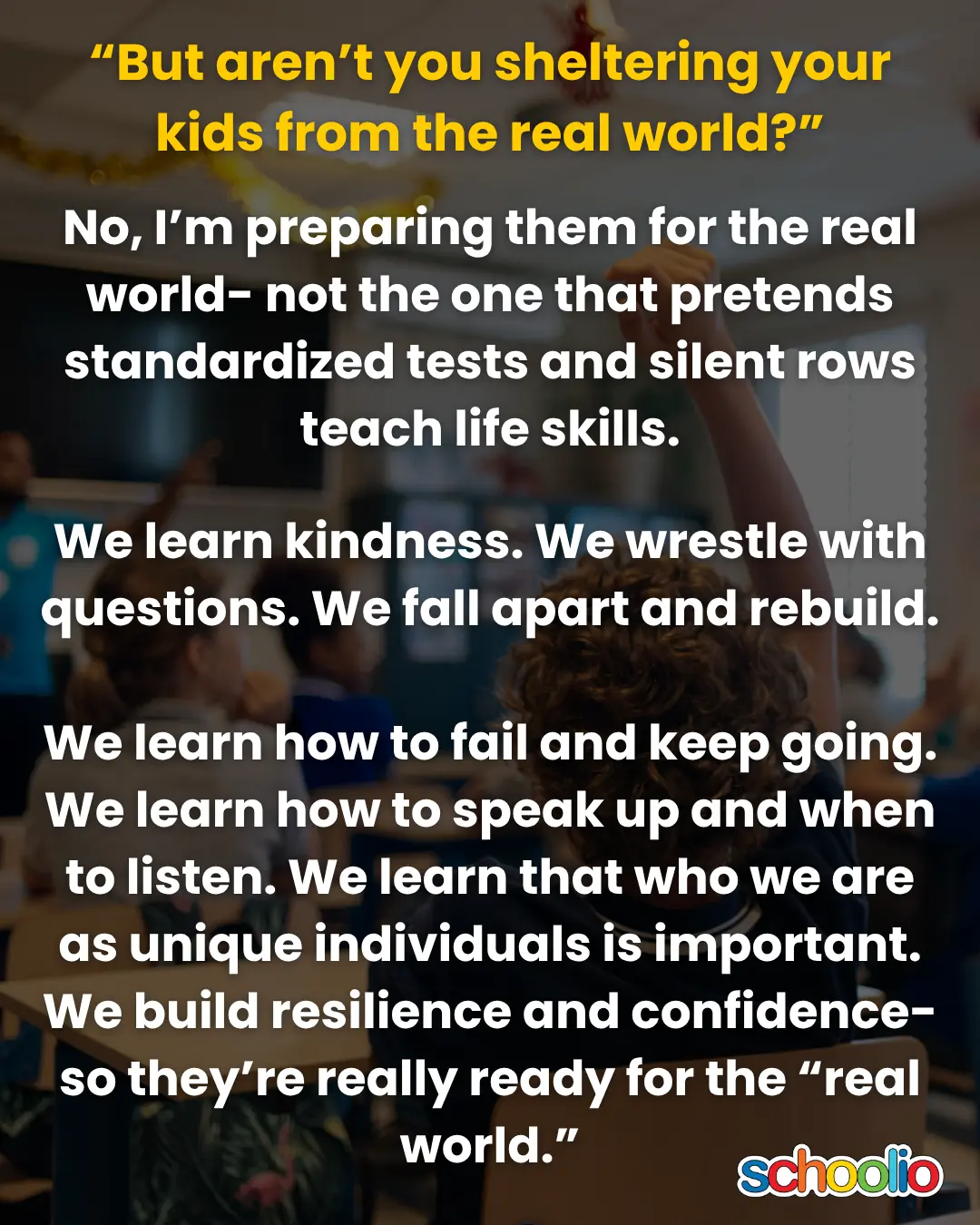
“But aren’t you sheltering your kids from the real world?”

At first, I tried to explain. Then I tried to debate. Now? I just smile — because the truth is, yes, I am.

I’m sheltering them from the pressure to fit in before they even know who they are.

From being teased in the cafeteria because they don’t wear the right shoes or laugh at the same jokes.

From classrooms that push every child through the same mold, at the same speed, regardless of how they learn best.

But I’m also preparing them for the world. For the real one — not the one that pretends standardized tests and silent rows teach life skills.

In our home, we talk about kindness. We wrestle with questions. We fall apart and rebuild.

We learn how to fail and keep going. We learn how to speak up and when to listen. We learn that who we are as unique individuals is important… and awesome. We build resilience and confidence- so they’re really ready for the “real world.”

They learn how to handle conflict, talk to cashiers and librarians, make friends of all ages, and advocate for themselves. They practice empathy daily because it’s not just a word on a poster — it’s part of our lessons.

Is that sheltering? Maybe. But it’s also strengthening.

Because when my child walks out into the world, I want them to know who they are.

Not just what they’ve memorized. Not just what other kids or teachers have told them they are.

I want them to feel confident enough to speak, not just raise their hand for permission.

I want them to see difference and not fear it — to question and not crumble.

So yes, we’re doing school differently. That doesn’t mean we’re hiding.

It means we’re building something deeper.

Not a bubble — but a bridge. And we’ll cross it together when it’s time.


With love,

Lindsey

Certified Special Ed Educator & Co-Founder, Schoolio

Homeschooling Your Neurodivergent Child: A Comprehensive Guide

Homeschooling your neurodivergent child.

As a parent, homeschooling your neurodivergent child offers an opportunity to provide tailored education that meets their unique needs. Understanding your child’s strengths and challenges is essential in creating an inclusive and supportive homeschooling environment.

Challenges neurodivergent children face in traditional education.

Neurodivergent children often face unique challenges in traditional educational settings. These challenges can include difficulty with social interactions, sensory processing issues, executive functioning deficits, and learning differences. These challenges can make it difficult for neurodivergent children to succeed in traditional classrooms, leading to frustration and a sense of failure.

Learning with ADHD

Neurodivergent children often face unique challenges in traditional educational settings. These challenges can include difficulty with social interactions, sensory processing issues, executive functioning deficits, and learning differences. For example, a child with autism may struggle with social cues and communication, which can make it difficult to connect with peers and teachers.

A child with ADHD may struggle with executive functioning, such as organizing tasks and managing time, which can lead to academic struggles and frustration. A child with dyslexia may struggle with reading and writing, which can impact their ability to learn and succeed in traditional classrooms. These challenges can make it difficult for neurodivergent children to succeed in traditional classrooms, leading to frustration and a sense of failure. In contrast, homeschooling can offer a tailored learning experience that addresses the specific needs of neurodivergent children.

How homeschooling your neurodivergent child can be beneficial.

Homeschooling can offer a tailored learning experience that addresses the specific needs of neurodivergent children. By creating a supportive and inclusive learning environment, homeschooling parents can help their children thrive academically and personally. By embracing their strengths, understanding neurodiversity, and adapting teaching methods, homeschooling parents can create a nurturing and engaging learning experience that meets the unique needs of their neurodivergent child.

While homeschooling has its own challenges, such as creating structure and routine or finding resources and support, it can offer a more individualized and supportive approach to education for neurodivergent children. By prioritizing their child’s needs and focusing on their strengths, homeschooling parents can help their neurodivergent child achieve academic success and personal growth.

Here are some tips for homeschooling your neurodivergent child effectively:

1. Embrace strengths

Focus on your child’s interests and talents. Encourage them to explore their passions, boosting self-esteem and enhancing their homeschooling experience.

2. Understand neurodiversity

Educate yourself on your child’s neurodivergent traits to support their homeschooling journey. Research resources, consult professionals, and join online forums to gain insight into their learning differences.

3. Structure and routine

Establish a consistent homeschooling schedule accommodating your child’s needs. Routine and structure provide stability and help them manage expectations and transitions.

4. Adapt teaching methods

Use multisensory teaching techniques to cater to your child’s learning preferences. For example, incorporate visual aids, hands-on activities, or auditory cues to enhance their homeschooling experience.

homeschooling your neurodivergent child

5. Collaborate with educators

Seek guidance from educators and therapists to develop a tailored homeschooling curriculum for your neurodivergent child. Utilize their expertise to create an effective and engaging learning plan.

6. Develop social skills

Facilitate social interactions for your child by organizing playdates, joining homeschooling co-ops, or participating in community events. These experiences can help them build social skills and connections with their peers. 

7. Advocate for your child

Educate others about neurodiversity and promote understanding and acceptance in your homeschooling community. Advocate for your child’s needs and ensure they receive the support they require.

8. Foster independence

Encourage your neurodivergent child to take on age-appropriate responsibilities within their homeschooling routine. This can help build their confidence and self-reliance.

9. Seek support

Connect with other homeschooling parents of neurodivergent children to share experiences, resources, and advice. This support network can offer invaluable guidance and encouragement.

10. Patience and understanding

Be patient and understanding with your child and yourself during your homeschooling journey. Celebrate small victories and remember that progress may be slow but steady.

Homeschooling your neurodivergent child can be a rewarding and fulfilling experience, allowing them to thrive academically and personally. By implementing these tips, you can create a nurturing and tailored homeschooling environment that supports your child’s unique needs and helps them reach their full potential.