Every year, as the calendar flips to April and May, a distinct phenomenon sweeps through families with school-aged children. We call it the ‘Mid-Year Crisis Pull.’ It is the exact moment when the accumulated weight of failing IEPs, the daily cycle of after-school restraint collapse, the chronic school refusal, and the exhausted meetings with administrators finally become too much to bear. If you are reading this, you probably didn’t plan to homeschool this year. In fact, it might be the very last thing you ever thought you would do. But staying in the traditional public school system is simply no longer a viable option for your child’s mental health or your family’s overall peace.
Making the decision to pull your child out of school mid-year can feel terrifying. You might feel a mix of profound relief and overwhelming anxiety. “What do I do now?” “How do I catch them up?” “Am I going to ruin their education?” Take a deep breath. You are not going to ruin them. The most important thing you can do right now is not to panic-buy a curriculum and force them back into a rigid learning environment. The first step is healing.
The First Step: Deschooling is Mandatory
If you have just pulled your child out of school under crisis conditions, hear this loud and clear: your first step is not academics. Your first step is deschooling and nervous system regulation. Deschooling is the vital adjustment period required for both the parent and the child to decompress from the intense stresses of traditional school. It is a period of unlearning the rigid rules, the institutionalized expectations, and the anxiety associated with performance.
A general rule of thumb in the broader homeschool community is to allow one month of deschooling for every year the child was enrolled in traditional school. For a child who has been in school for five years, that means you might spend up to five months simply existing, healing, and rediscovering what it means to learn without pressure.
What Deschooling Looks Like in Practice
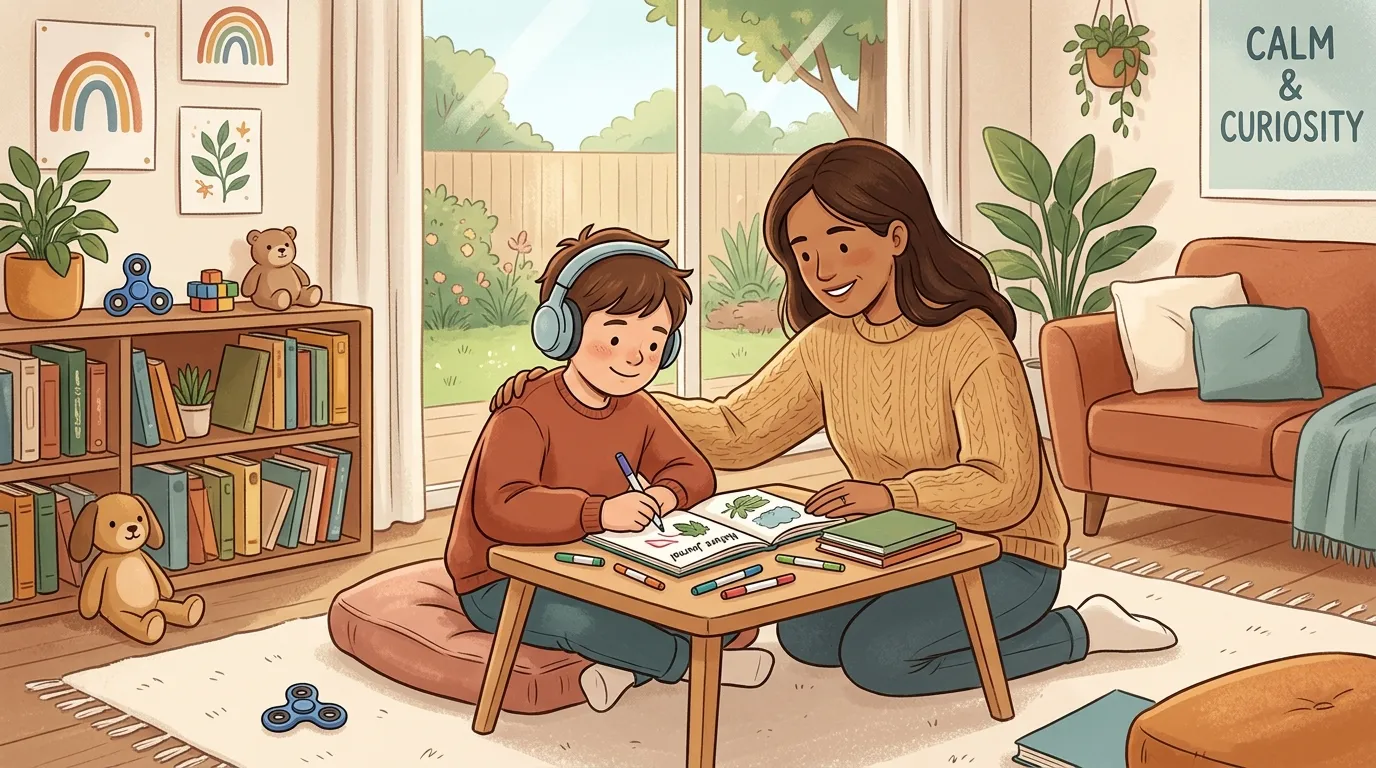
During the deschooling phase, do not try to replicate the classroom at home. Do not set an alarm for 7:30 AM. Do not purchase a rigid, 6-hour-a-day curriculum and force them to sit at the kitchen table. Instead, let them sleep. Sleep is when the brain heals and processes trauma. Let them play video games. Go for walks outside. Watch documentaries together. Your primary goal right now is to rebuild your relationship with your child, which has likely been severely strained by months or years of homework battles and morning rush anxiety.
According to research from the Child Mind Institute, children experiencing chronic stress or burnout require significant downtime to regulate their nervous systems. Their “fight or flight” response has been running on overdrive. You cannot teach a child who is in survival mode. The brain simply will not absorb new academic information until it feels physically and emotionally safe.
“When a child is burnt out from the system, our job isn’t to force them back into the mold that broke them in the first place. Homeschooling is healing, not fixing. You are not trying to ‘fix’ your neurodivergent child so they can fit back into a standardized box; you are changing their environment so they can thrive exactly as they are.” — Lindsey Casselman, Co-Founder of Schoolio
Transitioning to Academics: Slow and Steady
When you both feel the nervous system has reset—when the meltdowns have decreased, the sleep schedule has normalized, and a sense of calm has returned to your household—you can begin introducing academics. Start incredibly small. We recommend starting with just 10 minutes of math and 15 minutes of reading per day. Do not worry about what ‘grade’ they are supposed to be in.
Use gentle, low-pressure placement tests to find their actual operational level. It is incredibly common for a 5th grader experiencing extreme burnout to need 3rd-grade math to rebuild their foundational skills and confidence without triggering frustration intolerance. If you are struggling with the idea of “falling behind,” we highly recommend reading our post on When Grade-Level Tests Make Homeschool Parents Feel Like Failures to help reframe your perspective on academic timelines.
Choosing the Right Tools for Healing
You already have enough stress on your plate. Do not buy a complicated, multi-volume curriculum that requires you to read a massive teacher’s manual every Sunday night just to prepare for the week. You are in recovery mode too. Choose an open-and-go curriculum that allows you to sit down, open the lesson, and learn right alongside your child in a low-pressure way.
Schoolio’s Academics program is designed specifically to be open-and-go, allowing parents to facilitate learning without a teaching degree or hours of prep work. You can explore our Pricing Plans to find a digital or print option that fits your family’s immediate needs.
Remember, slow is not falling behind—especially for neurodivergent kids. Slow is how you build a lasting, stable foundation. Healing takes time, but the peace that comes when your child rediscovers their natural love of learning is worth every second of the journey. If you need more support during this transition, consider reading our guide on From Survival Mode to Success: How Homeschooling Helps Kids Recover from Public School Burnout.
Next Steps for Your Family
If you have just made the “Crisis Pull,” know that you are not alone. Thousands of families make this exact same choice every spring. Take a deep breath, close the laptops, and focus on peace.