Slow Is Not Falling Behind — Especially for Neurodivergent Kids
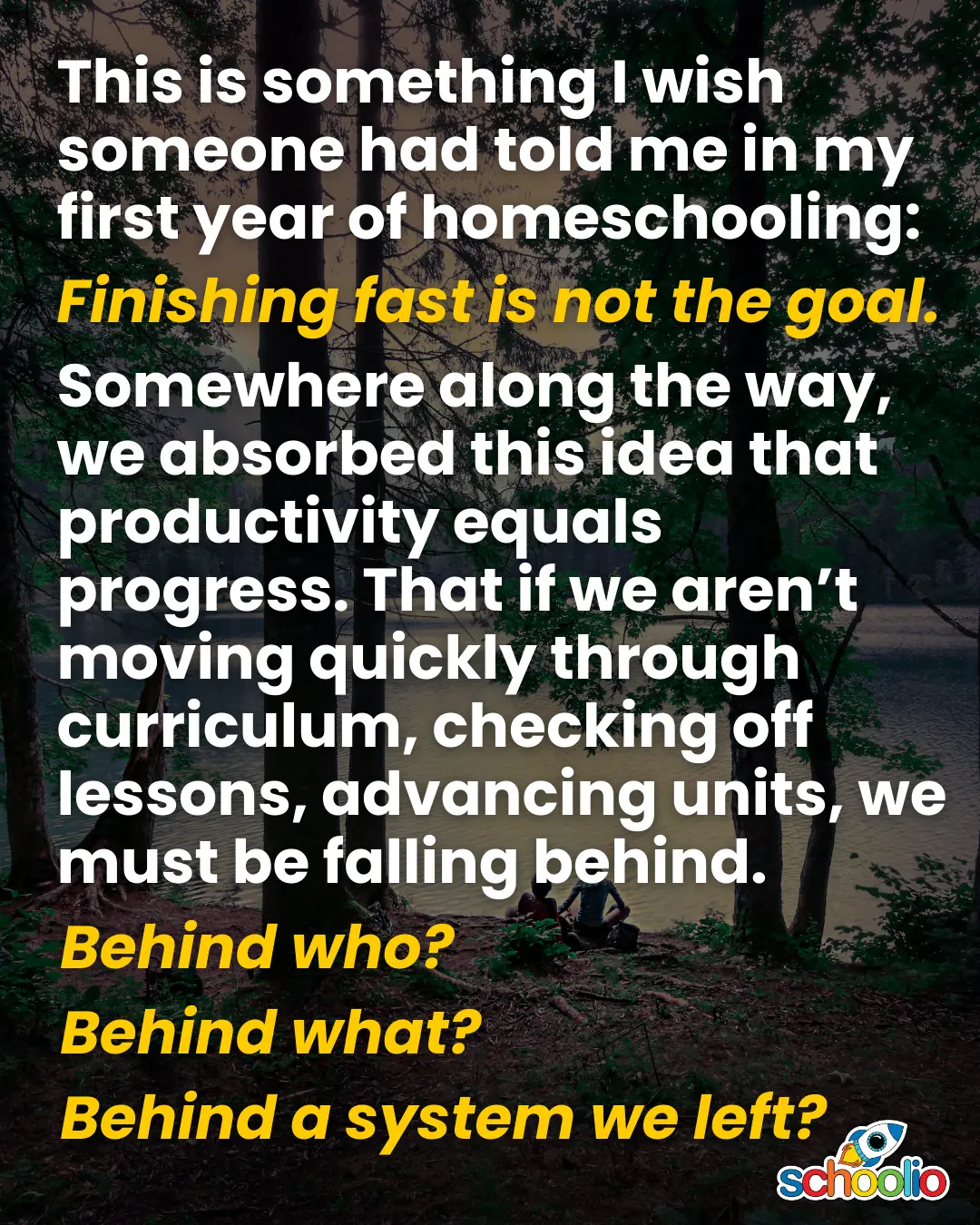
This is something I wish someone had told me in my first year of homeschooling:
Finishing fast is not the goal.
Especially not for neurodivergent kids.
Somewhere along the way, we absorbed this idea that productivity equals progress. That if we aren’t moving quickly through curriculum, checking off lessons, advancing units, we must be falling behind.
Behind who?
Behind what?
Behind a system we left?
When you’re homeschooling an autistic, ADHD, dyslexic, AuDHD, or otherwise neurodivergent child, pace is not a moral issue. It’s a nervous system issue.
And slow is not a flaw.
When “Four Lessons” Becomes Ten Days
Our writing courses, for example, are typically structured in four parts:
Lesson One: Brainstorming
Lesson Two: Writing day one
Lesson 3: Writing day two
Lesson 4: Editing
On paper, that’s four days.
In real life?
It might be ten.
And that’s okay.
If your child can only focus for fifteen solid minutes before their brain taps out, stretching one writing lesson across multiple days isn’t lowering the bar.
It’s protecting their capacity.
It’s teaching them that writing doesn’t have to feel like drowning.
I would rather see one writing assignment completed thoughtfully, with pride and confidence, than three rushed through with frustration and shutdown.
One done well is more valuable than three done miserably.
Every single time.
Productivity Culture Sneaks Into Homeschooling
Even when we leave traditional school, we bring its pace with us.
We feel pressure to “stay on track.”
We worry about being “behind.”
We compare how much we’ve covered.
But coverage is not comprehension.
Speed is not mastery.
And volume is not engagement.
Neurodivergent kids often need:
- More repetition (or less redundancy!)
- More breaks
- More sensory regulation
- More autonomy
- More recovery time
- More learning time dedicated to Social Skills and Emotional Intelligence
If we measure success by how much we completed, we miss the more important questions:
Did it stick?
Do they feel confident?
Are they emotionally regulated?
Engagement Beats Volume
When a child works at a sustainable pace, something powerful happens.
They stay willing.
They don’t start to hate the subject.
They don’t associate learning with shame or overwhelm.
They build confidence instead of resistance.
That’s not falling behind.
That’s building foundation.
And foundation matters more than speed.
Pace Is a Tool — Not a Rule
Curriculum pacing guides are suggestions.
Not contracts.
Not deadlines.
Not moral benchmarks.
If your child needs:
- Three days for one math concept
- Three weeks for a writing assignment
- To read one chapter a day instead of three
- A full pause during a hard life season
That is not failure.
That is responsive parenting.
That is adaptive education.
That is you paying attention to the human in front of you.
What Actually Matters
At the end of the year, I don’t ask:
“How many units did we finish?”
I ask:
Is my child still curious?
Do they feel capable?
Are they willing to try again tomorrow?
Because a happy, engaged child who trusts themselves as a learner will always outpace a burned-out child who learned to rush for approval.
Mastery beats completion.
Engagement beats volume.
Joy beats speed.
Slow is not behind.
Slow is intentional.
Slow is sustainable.
Slow is often exactly what neurodivergent kids need.
? Lindsey
certified special-ed educator, homeschool mom, & co-founder of Schoolio